Showing posts with label Northern Ireland. Show all posts

Friday, 12 June 2015

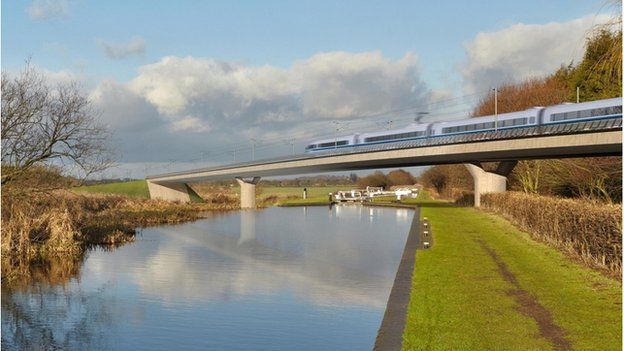
TIMELY CALL TO UNITE ON HS2

The Welsh, Scottish and Northern Ireland governments need to join forces to campaign for full Barnett consequentials resulting from the England-only High Speed Rail 2 project. 
Only a few weeks after HS2 Ltd, the planners behind the multi-billion pound development, stated that there is "no business case" for Scotland and that the project would now not be extended north of the border
Plaid Cymru parliamentary leader Jonathan Edwards MP speaking on June 11th at a Transport Questions session in the Commons to press the UK Government on securing a fair share of HS2 spending for Wales, said:
"I was disappointed to hear the Transport Secretary replying to my question by maintaining his position that there will be no fair funding from HS2 to Wales, despite the admission of HS2 Ltd.
"Any claims of a business case for HS2 that would benefit Wales has long been demolished by official KPMG figures showing that the project would wipe over £200m from the Welsh economy each year.
"Because HS2 will be funded from general taxation, taxpayers in Wales will pay for HS2 despite it undermining the Welsh economy.
"It is clear that the Westminster government has no intention of extending HS2 to Scotland. This means that it is clearly an England-only railway, and if the UK's funding mechanisms are to be applied correctly, this must result in a full and equitable share for the governments of Scotland, Wales and Northern Ireland to invest in their own countries' transport infrastructure.
"The moral case to me seems clear. If the Westminster government maintains its current position then I urge the national governments of Wales, Scotland and Northern Ireland to work together to demand fairness for our nations.

"The UK government needs to make a clear statement that this injustice will be rectified when the Comprehensive Spending Review is published, or face sustained pressure from Plaid Cymru and others who will continue to fight for a fair deal from this development."

Saturday, 24 January 2015

PARITY WITH SCOTLAND

It’s not difficult to come to the conclusion; that since the advent of devolution, that the package of powers we have been given in Wales is second rate when compared to both Scotland and Northern Ireland. With the publication of new legislative proposals (Thursday 22nd January) for further Scottish devolution, a new going-rate for powers has been set and Wales should settle for nothing less that parity with Scotland.

This is a simple matter of basic fairness. Wales is every bit as much a nation as Scotland and we should expect to be treated on the basis of equality. If we settle for second best, then there are also significant consequences for Wales. Scotland will have powers to block fracking for example; Welsh communities will be left to the tender mercy of Westminster. Scotland will have a greater say on how the money it raises is spent while in Wales we will continue to lack the levers to turn around our economy and create jobs.

A recent poll suggested a clear majority agree with Plaid Cymru that our nation should have parity of powers with Scotland. All the other party leaders should join Leanne Wood, Plaid Cymru’s Leader to work to secure the will of the people and a devolution package that respects Wales and gives our people the tools that other nations take for granted.

The status quo or doing nothing is not an option. If we choose that course then the gulf between the strength of our self-government and that of other countries within these islands will only continue to widen and to undermine Wales' position and hindering our ability to act in Wales' interests on a wide range of issues.

Monday, 12 January 2015

NORTHERN IRELAND 1 WALES 0


Legislation that should allow Corporation Tax powers to be devolved to Stormont has been published. Corporation tax is levied on the profits made by companies. The current rate paid by businesses in Northern Ireland is 21%, which compares unfavourably with the 12.5% rate in the Republic of Ireland. The Northern Ireland Executive wants to be able to match the tax rate in the Republic. The new powers won't come into effect until 2017.

It is vital that our country has the tools to build a fair and sustainable economy and it is important that power is fairly balanced across the UK, with Wales having parity with the other constituent parts. The Silk Commission recommended that Corporation Tax should be devolved to Wales in the event of it being devolved to other parts of the UK.

The Westminster Con Dem coalition government plans to pass the law before May's general election. All the political parties in Wales agreed to this principle and Plaid Cymru has long argued the case for this important lever to be made available to the Welsh Government. The party, formally known as New Labour, has said that it will not oppose the passage of the Bill. 

Sunday, 21 September 2014

UNFINISHED BUSINESS

Despite the platitudes and back slapping from the pro Union Westminster based politicians in the wake of the Scottish independence referendum, in their heart of hearts they must be aware of a number of important developments that no amount of spin can conceal. Firstly, they got away with it by the skin of their teeth and despite the wall of ‘No’ focused negativity and sentimental hogwash in the media (state owned and non state owned) some 45% of Scottish voters actually dared to chose to vote for independence.
Secondly it is a great deal easier to move from 45% to 51% than it is to go from a lower figure. Thirdly having got away with it this time, it will be much harder to get away with it next time around. Lastly, when Westminster fails to rapidly deliver the weighty but hastily promises made to the Scots in the last few weeks of the campaign (in an effort to firm up the no vote) then that democratic 55% figure of those who voted no may well begin to crumble away rather rapidly.
The Union that existed before the 18th September is no more, it is history; all of us are now living in a very different state from the one we were living in before the vote. The dynamic has changed, and not just for Scotland but for the rest of the inhabitants of these isles, especially here in Wales. For too long, we have tolerated a second rate devolutionary settlement, one that has made if difficult to deliver real change and significant economic and infrastructure improvements for our people.
The combination of an increasingly inert Labour in Wales governmental party, who don’t want the tools to do the job, but merely to occupy the seat of power to prevent anyone else doing anything with it, was barely acceptable during the age of devolution. The problem is that we are no longer living in the age of devolution; devolution as was is old hat, as we are living in the age of transition, an age of self-government.
I am not unionist, I never have been, I probably read enough history and seen enough to understand that the much vaunted Union is not delivering for increasing numbers of people across these isles.  It meant (and means) different things to different people in different places, for one thing Wales, is not a region of England, we are one of number of nations and peoples within these islands.
Wales (and the our people) need parity with the Scots (and Scotland) otherwise we will continue to be treated as a second rate nation and lack the tools to do the economic jobs that need doing. The old cosy status quo is gone; the UK has changed for good. It’s time for Wales to stop continually having to play catch up.
The Wales Bill needs to be radically written, to take account of the many promises that have been made to Scotland. It is important that Wales is not side-lined from the hopefully soon to start process of transferring power Scotland will be offered new powers and that a fast-tracked timetable for introducing the necessary legislation has been unveiled. 
Any new Scotland Bill will pass through the Westminster Parliament pretty much side by side with the current Wales Bill. It would be entirely unacceptable for MPs to vote through substantial powers for Scotland while voting through an inadequate second-rate bill for Wales.  The sluggish, piecemeal, incremental changes that have trickled down to Wales, as and when Westminster felt something was necessary have produced an unsatisfactory outcome for our nation and our people.

Saturday, 26 July 2014

FOOD FOR THOUGHT

The news that twenty councils in England are considering calling for the so-called "Tesco tax" on supermarkets, which could raise up to £400m a year, has excited some interest. Naturally the Westminster Con-Dem Government has come out and said that additional taxes on supermarkets would push up food prices. Oddly enough the three largest of the Westminster based and focused political parties have a warm if not cozy relationship with the large supermarket chains. This also ignores the fact that a similar tax already operates in Northern Ireland and Scotland.
Supporters of the tax believe the supermarkets can afford it, saying it's just a fraction of the costs that supermarkets had to swallow when VAT was raised in 2011. Supermarket retailers are likely to strongly resist the move arguing that they are taxed enough already. They already pay more in business rates, a property-based tax, than any other form of taxation and have been lobbying the Westminster government for a complete rethink on the system. I have no doubt that the larger retailers will also no doubt raise concerns about fresh investment and jobs being put at risk, etc.
Concerns about the economic impact of supermarkets on local economies are nothing new. Some years ago an excellent piece of work on this very subject was produced by 'The Campaign for the Preservation of Rural England' (CPRE) - their report: ‘A Real Choice exposed the real damage (including job losses) done by superstores to local economies something that should be seriously considered in relation to any proposed retail development that would affect our small towns and communities.

The CPRE report should make a valuable indirect contribution to the on-going debate over the future of the Welsh economy. When it comes to the really big issues then a sustainable and prosperous local economy in our communities has to be one of the biggest. It is important to be able to think outside the envelope and make long-term rather than short-term cash focused decisions. The redevelopment, restoration and retention of a living and breathing economic heart in our communities is vital.

Slowly but surely there has been an increased recognition of late of the benefits of local food economies and the important role of local shops and retailers, despite the fact that both the Westminster Government and the Welsh government have increasingly caved into pressures to weaken the ordinary people’s involvement in the planning process. The CPRE report exposed some of the real costs that are paid by local retailers and small businesses and consumers as retail planning policy is increasingly driven to benefit large scale superstore developments, which continue to aggressively expand their market share at the expense of local retailers, suppliers and customers.

Surveys (even as far back as 2005) revealed that 70% of British Shoppers would like to buy local food and 49% would like to buy more than they do. Yet the expansion of the supermarket sector market share at the expense of independent shops and smaller retailers continues pretty much unchecked – despite the spin from the larger retailers what this means is that shoppers will increasingly continue to have less and less  little opportunities to buy fresh, seasonal, traditional and easily traceable distinctive local food.

This is not about nimbyism, because Supermarkets and high quality food stores definitely have their place in the urban and rural economy but their contribution could be significantly enhanced if they stocked more locally grown, produced and clearly labelled local foodstuffs as they do in Brittany, something that would bring benefits to both farmers and consumers alike. 
The continued popularity of local farmers markets across South Wales has shown that the public is more than happy to buy quality local produce and to support local retailers. Yet most supermarkets still have barely between 1% and 2% turnover from local food producers, something that badly serves local food producers and customers alike.

Tuesday, 14 May 2013

BORIS, TAX AND SPEND

Boris Johnson the London Mayor has called for devolved taxation for London, a first step to borrowing powers no doubt. The Westminster Government, the Scottish Parliament and the Northern Ireland Assembly are able to borrow to invest funds in large infrastructure projects. Yet, we in Wales have no borrowing powers despite having law making powers, a situation that is both untenable and unjust in my opinion. The failure to include anything about borrowing powers in the pending Wales Bill, is a real  lost opportunity and perpetuates the constitutional status quo. 

In the modern world, despite the banking crisis, whether we like it or not governments borrow, the real argument should not be over borrowing powers, rather about what infrastructure schemes that our government in Cardiff wants to invest in and whether they deliver value for money. A variety of  dubious expensive infrastructure projects have been touted from time to time as providing the justification for having borrowing powers including the exceptionally poor value for money and environmentally destructive M4 Relief road.

The hair brained M4 relief road across the Gwent levels would come in at around £1 billion pounds plus and would provide few realistic medium, let alone long term benefits, as it is a short term solution. Amongst the reasons why the option of the M4 relief road (South of Newport) was dropped relatively recently a few years ago; aside for the financial cost (around £1 billion pounds) and environmental impact was the key issue of the funding model. Ministers were advised that not only would the new relief road to be subjected to tolls, but so would the existing M4 would also be tolled. 

Interestingly enough the only other toll road in the UK is the M6 in the Midlands which has seen toll prices increase by 175% since it was opened. Another reason why this option was dropped was because of evidence gained from the operation of the M6 toll road - which had never made any money because motorists can avoid it by using nearby non tolled motorways.  That M6 tolled Motorway has seen the number of users drop and it has done nothing to reduce congestion.

It is simply unacceptable for motorists to end up paying tolls on the Severn bridges, on the existing M4 any potential new relief road.  There are already significant complaints about the cost of the tolls on the Severn bridges and an additional burden on motorists and businesses can no way be justified.  A far more realistic financially viable longer term fix to the problem of the exiting M4 would be to upgrade the Southern Distributor Road – something that would offer a realistic more easily accessible alternative route in the event of any future M4 blocking accidents.

This solution would not only provide an alternative route to the M4 in the event of periodic accident related closures and congestion but would provide much better value for money coming in at around £300 million. If you are going to spend what is in effect public money then the bottom line is that you need to work it hard and maximise every benefit and every gain for the tax payers who will end up paying for it one way or another. With more powers come greater responsibilities  and with them both should come greater public accountability and transparency on the part of government when it comes to financial choices . 

Wednesday, 27 March 2013

A DATE FOR DAVE’S DIARY

So there we are then the 18th September 2014 with be the date on which the Scottish referendum will be held. I for on hope that Scotland votes for independence, believing that the Union as such is unsustainable and has passed its sell-by date. At the end of the day this is a matter for the Scottish people not the rest of us. As for the referendum I for one wonder whether David Cameron and the Westminster elite (I use the term loosely) will accept the result if the Scottish people vote for independence.

Let’s hope we don’t have any moving of goalposts on the part of the Westminster parliament. When it comes to referenda over sovereignty DC may do well to remember that you cannot pick and choose. Just as he has publically called on Argentina to respect the wishes of the people of the Falkland Islands to remain British, the Prime Minister should clearly and publically state that he will respect the democratically expressed wishes of the Scottish people.

In relation to the referendum campaign, some of David Cameron's interest may revolve about not ending up going down in history as the Conservative Prime Minister who lost Scotland. I have little doubt that much of his rhetoric (like most of the Unionists) in the Scottish referendum campaign will be designed to bully, frighten and patronize the Scottish people into voting No. As an outside observer of Scottish politics it would be easy to dismiss Cameron and the Westminster Tories (and their former New Labour and Lib Dem Unionist little helpers) as an irrelevance, especially after the near complete hammering they suffered in the Scottish parliamentary elections in 2011.

David Cameron
Cameron’s first problem is that he actually believes that the Union he is waffling on about actually functions effectively. The reality is that the Union could be described as barely functioning; the British state is ceasing to serve or deliver for large numbers of people, in Wales, England, Scotland and Northern Ireland. As far as I can seen Scotland politics is now fundamentally different as are Scotland priorities and perhaps the Scottish people’s perception of their place in Europe and a wider world.

The harsh reality is that behind Cameron's sentimental pitch lies a desperate need for Scotland's oil - the Conservatives wasted millions (if not billions) in the 1980's funding tax cuts for the rich and subsidizing the disposal (systematic looting may not be too harsh a word) of state assets to their friends in the City. The pre Thatcher Labour Government failed to establish a wealth fund in which to store future anticipated tax revenues from the North Sea (as was the case in Norway and may possibly Scotland).

The Conservatives under Thatcher and Major just blew the money looking after their own vested interests, New Labour under Blair and Brown did nothing to change the situation and opportunities were wasted. Given a logical non emotive rational debate, freely reported in the media (and here I include the BBC which no doubt will struggle ineffectively to hide its bias) then we could be in for an interesting debate.

Cameron's second problem is that the inhabitants of these islands no longer live in the 17th and 18th centuries. The once perceived political necessities of curbing the divine right of kings, protecting Imperial trade, controlling Ireland and Scotland for historic strategic reasons and conceding the City (and its interests) a free hand in world trade are all ancient history. The Empire is long gone and any real perception (outside of the pages of the Daily Telegraph, Daily Mail, Express and the Sun and some parts of the Conservative Party and UKIP) that the UK actually remains a real power and influence in the world died quietly at Suez in 1956.

Cameron's problem is that while he may be a nice chap there is a real danger that in the eyes of many Scots he manages to combine arrogance, ignorance and a lack of understanding of how the Union has actually worked and a basic understanding of how states actually work. Over time, peoples have combined, been conquered, formed, reformed, participated in and benefited from the existence of states, many of whom have been multi ethnic in nature. During the same period peoples have left failing states, established new states and re-established old states. It's actually part of the Human condition that's what we do.

The Union (as is) is no longer works, it is not delivering basic economic opportunities to people as individuals or as communities across significant parts of England, Wales, Scotland and Northern Ireland. Simply appealing to emotive sentiment and a rose tinted vision of what is effectively a long dead vision of the past just won't do and just won't work.

None of us can live off nostalgia; it won't butter any bread let alone buy any. We are in for an interesting few months as the debate on Scotland's future develops. Personally I think that the Scottish Government should call in international observers for the referendum to ensure that poll is a free and fair vote and any Unionist skullduggery or interference in the democratic process can be avoided. And David Cameron should clearly and publically state that he will respect the democratically expressed wishes of the Scottish people.

Tuesday, 18 December 2012

LONG TERM THINKING

In Northern Ireland there is clear evidence of some long term thinking as more than £ 44 million pounds has been approved to boost green energy generation including potentially some 1,000 megawatts of renewable wind generation. Some of the funding will go to improve the transmission network and sub stations. The Northern Ireland Executive has set a target of generating 40% of the Northern Ireland’s energy from renewable sources by 2020.

The Scottish Government revealed its new green energy target set at 50% of demand by 2015. The Scots have already surpassed their 31% target for 2001 by about 4%. The SNP Government has stated that the new target would help build on the current 11,000 jobs in green energy following a "bumper year" for investment, with projects estimated to be worth £2.3 billion pounds.

The Scottish government's new interim target for 2015 is included in a refreshed Routemap for Renewable Energy for Scotland. Sustainable energy generation has been boosted by the launch (in October 2012) of a £103 million pound fund for Scottish renewable energy projects. The Renewable Energy Investment Fund (REIF) is designed to attract more private investment to the sector. Scottish priorities include wave and tidal energy, and renewable district heating.

Meanwhile in Wales...yesterday the Welsh Labour in Wales Government yesterday woke from its post Welsh general election slumbers and demanded control of large-scale energy projects in Wales. Carwyn Jones now says that the Welsh Government should have the same powers as its counterparts in Scotland and Northern Ireland to set energy policy – it’s a pity that he did not ask for the powers when Labour had a majority in Westminster.

The truth is that Plaid’s Jonathan Edwards MP and his colleagues in Westminster have done more (since the last Westminster general election) to try to get energy policy devolved to Wales than the whole of the Labour Party in Westminster and the Labour in Wales Government in Cardiff. The party formerly known as New Labour has had plenty of opportunities to stand up for Wales; it has just chosen to put its own party interests before those of the Welsh nation.

Saturday, 10 March 2012

JUST SAY NO!

The Western Mail (Saturday 10th March) carried an article about the selection for the Team GB football team for the 2012 London Olympics. They tried to pas sit off as some sort of debate over whether players from Celtic nations should be involved. Andrew RT Davies, Welsh Conservative leader at the National Assembly, proved that he clearly does not get it or chooses not too. While Plaid AM for South Wales West, Bethan Jenkins got it spot on.

The continued existence of an independent Welsh international football team, especially through the temporary emergence of a Team GB football team, is non negotiable. The UK Government simply does not get it and is probably incapable of getting it. Why would an English sports minister have the slightest concern about the future of the Welsh national football team? FIFA's word is clearly not good enough, the organisation is tainted with a long and recent history of corruption and some very questionable financial dealings.

 Our Football Association of Wales is one of the world's oldest football associations and is an important symbol of our nation.The game in Wales is undergoing a renaissance at the moment and Welsh footballers and Welsh teams have a higher profile than for a while domestically and internationally - this should not be threatened under any circumstances. The football associations of Northern Ireland, Scotland and Wales have pretty clearly stated (on more than a few occasions) that they are not interested in a Team GB football Team, which bit of NO don't the London Olympic Organisers understand?

Monday, 14 November 2011

WHICH BIT OF 'NO' DON'T YOU GET?

The knowledge that the UK Government has accepted FIFA assurances that Welsh football independence would not be threatened by the creation of the 'British Olympic football team' does not surprise me. Aside form the fact that we are not necessarily dealing with the sharpest tools in the box here, the problem may be made more complicated by the problem of differentiation. By this I mean there are some people who have real difficulty differentiating between British and English - ask someone in Scotland, Wales and Northern Ireland and you may get a straight answer, especially when it comes to sport.

Nothing should be allowed to threaten to undermine the continued existence of an independent Welsh international football team, especially the emergence of a temporary Team GB football team. The UK Government simply does not get it and is probably incapable of getting it. I mean why would an English sports minister have the slightest concern about the future of the Welsh national football team? FIFA's word is not good enough, the organisation is tainted with a long and recent history of corruption and questionable financial dealings.

Our Football Association of Wales is one of the world's oldest football associations and is any important symbol of our nation.The game in Wales is undergoing a renaissance at the moment and Welsh footballers and Welsh teams have a higher profile than for a while domestically and internationally - this should not be threatened under any circumstances. The football associations of Northern Ireland, Scotland and Wales have pretty clearly stated (on more than a few occasions) that they are not interested in a Team GB football Team, which bit of NO don't the London Olympic Organisers understand?

Thursday, 27 October 2011

THE UNION...DISCUSS...

News that Scotland with full control of it's territorial waters would be the world's sixth richest country with it's geographical share of North Sea oil may make more than a few people both inside and outside of Scotland and sit up and take note. The SNP's John Swinney, in his keynote address to his party's conference, makes the point that UK government has been reaping the benefits of the resource for too long and that the Scotland has been subsidising the rest of the UK.

Scotland contributes more to the UK in tax revenue than Scotland gets back in the UK public spending. Mr Swinney told the SNP conference that: "The figures show that with a geographical share of our offshore resources, Scotland would be the sixth-wealthiest country in the world - 10 places ahead of the UK at 16th." The SNP rightly believe that independence would give the Scottish Parliament the "normal powers enjoyed by nations across the world to deliver jobs and growth".

Makes you think doesn't it? It might make even some of the almost perpetually winging Unionists sit up and take note as well. Wales is not Scotland and Scotland is not Wales there are similarities and there are differences and not everything that would work in Scotland would work in Wales and vice verse. Differences and similarities aside there does need to be a non hysterical rational debate about the state of the union and Wales's place within it, especially if the Scottish people decide to re-establish an independent Scotland.

I have noticed over the years that there is a tendency for Unionists to A) get hysterical if anyone questions the union and B) a tendency to talk about the about the Union as if it has been set in stone for ever, it's not, it has never been. The union has been a movable feast since it's inception in 1801 with the abolition of Ireland's parliament, the Scottish parliament was abolished in 1701. Ireland's national struggle or Irish Home rule agitation (depending on your point of view) acted almost as smoke screen to cover the development of administrative devolution developed in Scotland and Wales from the 1880's onwards.

The Scottish Office was created in 1885 along with the post of Secretary for Scotland (there had previously been a post of Secretary of State for Scotland from 1707 until 1745). From 1892 onwards the Secretary for Scotland sat in cabinet, but was not officially a full member of the cabinet of the United Kingdom. The Secretary for Scotland post was upgraded to full Secretary of State rank as Secretary of State for Scotland in 1926.

We have come along way since the Wales and Berwick Act (1746) was passed stating that that in all future laws, 'England' would by default include Wales and Berwick-upon-Tweed (This act was finally repealed in 1967). Even during what might be called by some the high-tide of the Union there were practical gestures towards Wales.

In 1881 the Welsh Sunday Closing Act was passed, the first specific legislation exclusively concerned with Wales. A Central Welsh Board was established in 1896 for inspection of grammar schools this was established under the Welsh Intermediate Education Act 1889, a separate Welsh Department of the Board of Education was created in 1907. An Agricultural Council for Wales was established in 1912, and the Ministry of Agriculture and Fisheries ran its own Welsh Office from 1919.

A post of Minister of Welsh Affairs was first established in 1951, held initially by the UK Home Secretary. Other low level changes followed, including the establishment of a Digest of Welsh Statistics in 1954, and Cardiff's designation as Wales’s capital city in 1955 (oddly enough these later changes took place under the auspices of a Conservative Government. The Labour government in Westminster established the Welsh Office (in 1964) with a Secretary of State for Wales, and added to its powers including health (1968), agriculture (1969) and education (1970).

The Union, thus rather than being set in stone has been constantly tinkered with for most of its life. A major change came when most of Ireland gained it's independence in 1921/1922. The six counties (in the north east) remained in the Union gaining the Stormont parliament (from 1922) which lasted until the early 1970's when it was overwhelmed by the troubles and Westminster took over. Yet even the most die hard Unionist Conservative governments repeatedly attempted to establish devolved civil government in Ireland's trouble north east if only to curb the conflict.

The problem is unlike a significant portion of the Unionists we are no longer in the latter part of the nineteenth century, we have gone well beyond tinkering with the Union to try to make it work. Now as Scotland makes measurable progress towards independence, the remaining UK nations need to seriously consider their own constitutional futures within or without what may end up as constitutional remnant.

What's been almost entirely conspicuous by its absence is any form of serious debate on the future constitutional relationship of the countries of these islands, especially if Scotland regains it's independence. Political and economic unions are not set in stone and neither are multi-national states, they come and go, existing as long as the will, the political ideal, the military force or the creation myth remains powerful.

The economic and political factors that lead to the creation of the original union no longer apply were are living in an entirely different world. The perceived end of the union does not mean that the social union ends up being resolved - why would it? My relatives and friends scattered across England will still remains my relatives and my friends. Nor that businesses relationships would change, economic relationships may change, they will adapt and new fairer ones will be forged.

Lets have an end to the unionist hysteria and have some rational discussion. Here is Wales, with a very few exceptions, that's all we have had from the three main Unionist parties. If one thing is probably certain in these uncertain times it's that here in Wales we can certainly no longer rely on a self-interested, self-serving, unambitious, reactionary Labour movement to make any case for our nation, let alone stand up for Wales.