Showing posts with label The Con Dem Government. Show all posts

Wednesday, 26 March 2014

HANDBAGS AT 50 YARDS?

I have a small degree of sympathy with the view expressed by the Welsh Government that London should pay for rail electrification projects, as control over Network Rail (in Wales) has not (yet - if you read the Silk Commission report) been devolved to Wales. Now I would qualify that by saying that London (as the senior partner) in the Union should pay for UK wide infrastructure projects, and the electrification of the railway from London to Swansea would tick the box for most people as being a UK infrastructure project.

Rail electrification in the South?
The electrification of the Valley lines into Cardiff, possibly Swansea and hopefully Newport may well be another matter, having not been on the cards when the original electrification projects were planned. It is worth noting at this point that the last New Labour Westminster Government never intended the proposed electrification of the old Great Western line to go beyond Bristol – so much for standing up for Wales. As for electrifying the Valley lines, I would personally suggest getting on with it, it has been calculated that the Welsh Government could pay for that from its own transport budget, even after the Con Dem imposed cuts.

The problem comes from the fact that when it comes to transport infrastructure projects we in Wales literally have one hand tied behind out backs, because, unlike in Scotland, we have no control over transport infrastructure planning. It should be obvious by now that this (and the previous Westminster government) have little more than a passing interest in Wales, let alone any concerns for our national interests.

Handbags at fifty yards?
There is an old diplomatic service / civil service adage about crisis management, which goes along the lines of first you create your crisis, and then you manage it. That said there is more than a distinctly manufactured feel to this latest spat between the Labour Government in Cardiff Bay and the Con Dem coalition government in Westminster. Perhaps rather than a constitutional crisis or even a disagreement about more powers or a clash over point of principal, it may be more of a case of handbags at fifty yards.

The party formerly known as New Labour, when in Westminster government proved to be largely indifferent to Welsh interests, beyond political token gestures. This view can be said to have been backed up by the Welsh MPs voting record on matters of interest to Wales, since their party lost power in Westminster. Sadly this latest spat merely serves to strengthen the illusion that our nominally Welsh Labour government is standing up for Wales, the danger is that this dispute could end up delaying the much needed electrification of the valley lines for a few more years. 

We should have learned by now that we cannot rely on any Westminster Government to deliver for Wales. Let's electrify the Valley lines and the Ebbw Vale line (initially) into Cardiff by using some of the National Assembly's 0.78 billion transport budget. Here  in the South East, we need railway stations at Caerleon and Magor and better facilities for passengers and more stopping services at Severn Tunnel, Chepstow and Abergavenny along with more secure park and ride schemes and better integration with local bus services – it’s time to stop asking and to start demanding that government actually delivers for our country. 

Thursday, 21 November 2013

THE GHOST OF CHRISTMAS PAST...

It has been suggested that David Cameron is considering launching an investigation of the energy market. Whether or not the ‘’Big 6’ energy cartel members are colluding to rig prices or deliberately exploiting excessive market power to fatten profits in an unfair way is perhaps open to question in some circles. From the perspective of the cartel members (and investors) if any investigation is launched then they (the ‘Big 6’) may argue that uncertainty will surround the energy industry.

If there is an investigation then if a Competition Commission inquiry may investigate whether there are structural flaws in the industry which mean that competition does not serve consumers' interests adequately. One significant question that should be asked (and hopefully answered) is whether it is good or bad for consumers, and for the economy for energy companies to both generate and sell energy to their customers.

Now it can be argued that the all in one generators and sellers of energy have little incentive to keep retail prices as low as possible, since higher prices boost the profits of their generators, not to mention the value of whatever gas reserves they happen to hold. It is also worth noting that if the energy industry is referred to the Competition Commission rather than to Ofgem (the current and fairly toothless energy regulator) then that pretty much puts the skids under Ofgem. Downing Street may believe that that is important to show that the big players in the energy industry suffer from behavioural rather than any structural weakness.  

Oddly enough there was a Conservative pre-election pledge for an independent inquiry into the £25 billion-a-year energy industry which was quietly dropped by the Com Dem Coalition Government in August 2010, when no doubt when they hoped no one would notice. Back in October 2009, the then Tory Energy Spokesman, Greg Clark has said that the "cartel" of the big 6 energy firms will be referred to the Competition Commission by an incoming Conservative Government.

He also said that there was an unacceptable lag between the cost of wholesale gas prices and household energy bills - noting that customers were on average being charged some £74 pound too much for their energy per year. An 'independent' investigation in the Energy companies refusal to pass on reductions in wholesale energy prices to customers was also mooted along with an overhaul the energy sector billing structure and charges. 

Few people this winter will have as snug a relationship with the gas companies as that exists between the political parties (within the Westminster village) and the energy supply companies. Before the last Westminster general election, the Conservatives and the Liberal Democrats made repeated criticisms (and much political capital) from New Labour for its failure to tackle prices charged by the Big Six suppliers. Both the opposition parties publicly and repeatedly demanded an inquiry by the Competition Commission. 

Now don't get me wrong, an investigation sounds great, but, it was a Conservative Government that was responsible for starting the whole sorry mess by privatising the energy market in the first place. Throwing any rational energy pricing structure upon the whims of the alleged 'free market' by allowing the newly privatised energy companies to price gouge customers in the first place was a catastrophically bad idea. By the time the dust settles the fact that Conservatives pre election pledge ended being kicked into the long grass may well yet come back and haunt them before the next Westminster election. 

Saturday, 7 September 2013

THE BEDROOM TAX AND THE UN

Just to make Mr Cameron’s day, a leading United Nation’s officialis visiting the UK to examine the impact of the Government’s toxic ‘bedroomtax’ policy on the human rights of thousands of vulnerable people in the UK. However, the UN special rapporteur for housing, Raquel Rolnik, will be visiting every UK nation apart from Wales during her two-week tour of major cities.

One of the not unforeseen consequences of the Con Dem Government’s (Labour approved) Bedroom tax will be an increase in the number of people and families ending up homelessness. The early effects of the bedroom tax arealready beginning to show in official figures with a rise in the number of Landlord Possession claims and orders issued in the 3 months from April to June 2013.

This follows the introduction of the bedroom tax, statistics show that - compared to the same period last year – the number of claims had risen by 11% and the number of possession orders issued increased by 16%. The majority of these claims and orders was in the social housing sector which is the sector most affected by the bedroom tax. The statistics also show an increase of 6.5% in the number of warrants for eviction issued in the private rented sector, as families in Wales continue to struggle with the cost of living and other changes to the benefits system introduced in April.

As we all brace ourselves for the financial consequences of a potentially hard winter (increased heating and fuel bills) it will be less well off vulnerable poorer families who will be least able to face the prospect of larger and more expensive heating and energy bills. If their finances have already been squeezed by the costs of the bedroom tax then extra heating and energy costs could be the final straw resulting in many families potentially facing eviction by Christmas.

Friday, 19 July 2013

DANCING IN CARDIFF BAY?

There is an old saying, he who pays the pier calls the tune? That said, it is worth remembering that it was the Labour in Wales government in Cardiff, not the Con Dems in Westminster, that chose to reduce investment its capital investment in railways from £37 million (2013) to £12 million (2014-15) – incidentally this £16 million pound saving would not even pay 10% of the provisional costs of the Heads of the Valleys road scheme let alone make a dent in the interest payments on any loans used to pay for the proposed M4 Relief Road.

Now it would be easy to suggest that Labour in Wales’s decision is literally be a case of robbing Peter to pay Paul as the budget won’t stretch to paying for everything. Limited budgets aside for the moment, this was still a bad decision, one that does little to build (or rebuild) our fragmented public transport system. The underlying problem is that rail investment is not yet devolved and the real decisions about significant infrastructure investment in Wales are still being made in Westminster and Whitehall.

So obviously when looking at transport infrastructure spending and development with a London centric perspective (which no doubt continues to hold sway in some of the darker reaches of the civil service here in Wales) tends to ensure that smaller projects that could have a significant impact here in Wales tend to drop down the long list of priorities. This lack of budgetary authority is something that directly interferes with our ability to choose the most cost effective transport option.

Full budgetary authority for transport in Wales needs to be devolved to the Welsh Government because the combination of spilt budgetary authority (between Cardiff and London) and the ineffective arms length relationship between the Welsh Government and Network Rail is not addressing our countries transport needs. Now the lack of budgetary authority is only part of the problem. It is worth remembering that the Transport (Wales) Act (which was effective from February 2006) gave the National Assembly the power to plan and co-ordinate an integrated transport system.

Now this may not sit well with what appears to be an old style Welsh Office inspired civil service that may still be thinking in London centric terms having failed to grasp the concept of devolution. That aside, the real problem is the almost total lack of any vision on the part of the Labour in Wales government, which like various other Labour groups across our country is more concerned with being there than doing anything.

Even the most passive observer of the hitherto inert Labour in Wales Government in Cardiff should not be surprised to see that road has been chosen over rail in relation to transport priorities. This largely passive but not mostly harmless government has shelved several rail schemes that could make a real difference to people’s lives and deliver value for money in favour of questionable expensive road schemes that won’t deliver much to our communities let alone value for money.

Back in January (2013) the Welsh Government released figures that show that it intended to spend around £805 million pounds on finishing off the Heads of the Valleys Road (something that has been on the drawing board by my reckoning since 1958) by 2020. Now they are salivating at the prospect of additional financial powers even if part of the price may be a commitment to construct an excessively expensive M4 Relief road with dubious economic benefits and a significant price tag – I wonder whatever happened to value for money?

Wednesday, 26 June 2013

WAITING FOR THE WORD

As part of the public spending review, the Chancellor George Osbourne announced that the Welsh government's budget will be cut by two per cent in 2015. Revealing details of the spending review MPs were told that the day-to-day revenue budget would be set at £13.6 billion pounds. He also revealed that the UK government would publish its response to the Silk commission on assembly powers shortly and details of an "impressive" M4 relief road plan would be revealed on Wednesday. The Wales Office (the Whitehall department) which represents Wales in the UK government would get a cut of 10% in its running costs. The Welsh government budget cuts are part of £11.5 billion pound savings from the UK government's overall spending plans of £740 billion pounds. Mr Osborne has more than once (before today) highlighted the need for a M4 relief road around Newport, while supporters of the scheme, and those who oppose it were hoping that the Chancellor would give the scheme the go-ahead this week it now appears that they and the residents of Brynglas (who’s homes have been threatened by a new M4 tunnel) will now have to wait a little longer before they get a definitive answer. Serious questions remain over how much the project will cost up to £1 billion pounds will be paid for? Will it be a toll road? Just exactly how better the money could be spent?

Monday, 24 June 2013

A VIEW FROM A BRIDGE

Well there you have it or perhaps not not? Any changes in the running of the Severn bridges must benefit motorists from both Wales and England, a UK Westminster government minister has warned. The Welsh government has indicated that it would like to take ownership of the two Severn Bridges when they come back into public ownership in 2018.  By then it is expected that Severn River Crossings plc will have milked its cash cow to the tune of about £ 1.029 billion pounds. Meanwhile in Cardiff, Carwyn Jones has said any money left over from tolls could go towards upgrading the existing M4 (in Wales) and Westminster Transport Minister Stephen Hammond has said that no decisions (one way or the other) have been made over ownership or tolls.


While the Severn Bridges and the tolls may be out or sight and out of mind to Westminster ministers - perhaps as our interests and our county are peripheral to the Westminster mindset – that does not help us very much. This sorry state of affairs may be a result of abandoning future planning to the ‘free market’ if nothing else it is a clear indication that the concept of forward planning and taking the long view no longer fits  into the Westminster worldview.  Differences of opinion between Wales and Westminster are not new, what makes this latest spat more ironic is that the Welsh Conservatives have nailed their colours to the mast by calling for control of the Severn Bridges to reside in the hands of the Welsh people.

Last year a report for the Welsh government suggestedthat abolishing the tolls would increase traffic by an estimated 12% - equivalent to about 11,000 vehicles a day – and that businesses and commuters forked out around £ 80 million pounds a year crossing the Severn bridges. Studies into the impact of the Severn Bridge Tolls on our economy are nothing new. Back in October 2010, Professor Peter Midmore's independent economicstudy of the Severn Bridge tolls which has recommended that the revenues should stay in Wales, once the crossings revert to public hands. The study of 122 businesses commissioned by the Federation of Small Businesses found the tolls had a negative impact on 30% of firms in South Wales, this compared with 18% in the Greater Bristol area.


While noting that the economic impact was not substantial for most, the 2010 study found that transport; construction and tourism-related companies reliant on regular crossings suffered increased costs and reduced competitiveness. The study found that Welsh businesses were unfairly penalised by the tolls and concluded that the money should be shared with the Assembly Government and used to improve Wales’ roads and public transport. Under the current stitch up (sorry set-up), once the cost of the Second Severn Crossing is paid off less on-going maintenance costs (possibly by 2018) then that handy revenue stream will revert to Treasury coffers in Westminster. 

Tuesday, 7 May 2013

WILL WE BE DANCING IN THE DARK?

Despite the spin (which is clearly not working) the impression you get is that the Con Dem Coalition Government is actually quite shambolic. If you wanted a specific government department in Westminster and Whitehall to sum up the coalition then you need look no further than the Department of Energy and Climate Change (DECC). This pretty important ministry has gone through three energy ministers in the last year, which considering this ministry allegedly looks after one of the most complex areas of legislation in Whitehall, hardly suggests any minister has had time to gain an understanding of their brief. 

This resembles little more of an expense game of musical chairs. As noted elsewhere this farce is reminiscent of Labour’s approach to the defence brief, which for those who can be asked to remember managed to feature a largely forgettable cast of nonentities, something that barely made good politics, let alone suggested that anyone had a grasp of the complexities of their ministerial brief.  Back at the DECC, the ministerial game of musical chairs had also been paralleled with a significant turnover of senior civil servants, which does not suggest that the ministry is a happy ship let alone getting on with it’s job.  

A recent report on the UK energy sector by Liberum Capital suggested that the problems at the ministry may be the least of our problems, as they suggest that current UK Energy Policy is just not plausible.  Their view is that successive UK governments have grossly underestimated the engineering, financial, and economic challenges that are posed by the drive to decarbonise the electricity sector by 2030. The necessary move from a largely fossil fuel based power system to one dominated by renewables (and if Westminster and Whitehall get their way nuclear) in about a decade and a half, while keeping the lights on and consumer bills affordable, may well be simply unattainable. 

It has been estimated that the total required investment to deliver policy goals is some £161 billion pounds from now up until 2020 and some £376 billion pounds up until 2030. Even with the large projected increase in public support (which will largely fund the nuclear programme and its subsidy) provided by the Energy Bill, Liberum Capital suggest that it is difficult to envisage that the finance will be forthcoming when the large European Utility companies are actually reducing capital expenditure. The really scary bit, other than the prospect of periodic power cuts, is that even if the investment actually happens they consumers may see electricity bills rise by at least 30% by 2020 and 100% by 2030 in real terms. 


When the energy crisis (which incidentally probably won’t happen in Scotland) arrives, considering the current level of hostility being directed at the excessive profits being generated and directed towards the members of the ‘Big 6’ energy cartel, I would not be surprised if whatever government who happens to be in power does not move towards a return to some form of public or state ownership.  When we get there may be three main casualties, firstly  the government of the day who are unlucky enough to be in power , secondly the consumers (us) who may be left literally sat in the dark and the cold and finally thirdly the large energy companies (and their shareholders). 

I have no doubt that when that when the lights begin to flicker that whoever is in government (regardless of the party label) will move rapidly to protect themselves and the electorate (who also happen to be energy consumers) by securing control of the means of energy production and distribution regardless of the consequences for the energy cartel members. The real questions that may well never be answered will be why did it take so long for the Westminster government to wake up to the consequences of not really having an energy development policy and why did they leave energy planning to a cartel that were only concerned with ramping up profits?

The lights may not go out in Scotland, where successive Scottish Governments have consistently worked to tackle the threat of Climate change and develop sustainable energy reserves. Scotland is working towards a plan for a 42% cut in greenhouse gas emissions by 2020, rising to 80% by 2050. These proposals which were first unveiled in 2009 are far more ambitious than anything that has been proposed in Westminster,  where the 2020 target (set before the Con Dems came to power) for cutting carbon emissions has been set at 34%. The Scottish Government has already set out a wide-ranging vision to address climate change, which includes a drive to boost renewable energy such as wind and wave power.

Scottish Ministers also aim to see significant progress in boosting the energy efficiency of buildings, increase the number of electric vehicles on the roads and aim to cut in emissions across the farming and rural sector. This is serious forward thinking on the part of the Scottish government as energy experts have for several years been consistently warning of a serious future shortfall in Britain's energy supplies. Control of energy policy needs to be devolved to the National Assembly and it’s time for some original non nuclear thinking and a fundamental sea change in attitude from government in Wales when it comes to energy policy. 

Imagine what we could do if our Government (in Cardiff) possessed similar powers (and the political will and imagination) to develop the alternative energy sector here in Wales as is being done in Scotland. Rather than empty platitudes we need real direction when it comes to the development of safe and secure energy resources as power generation can provide the potential for real community beneficial and sustainable long term job opportunities. The renewable energy sector should play an immensely important role in creating more green energy jobs and make sure that our lights stay on rather than end up dancing in the dark!.

Tuesday, 16 April 2013

THE ISLE OF THE BLESSED TAX EVADERS

Luxembourg has agreed to reduce the secrecy surrounding its banks, saying that it will implement rules on the automatic exchange of bank account information with its European Union partners from 2015. The country with a population of only 500,000 people, has banks and other financial institutions with assets worth more than 20 times the country's economic output. The Prime Minister of Luxembourg, Jean-Claude Juncker, plans to introduce the reforms in two years, in line with the EU Savings Directive. The rules of the Directive aim  to create greater transparency and minimise tax evasion. 


Since the financial crash Calls for a crackdown on bank secrecy have been increasing, as governments are increasingly desperate to raise more taxes to support their finances. Luxembourg will now move to strengthen co-operation with foreign tax authorities. Germany signed a tax evasion treaty with Switzerland - another European banking centre known for its secrecy – earlier in the month. The treaty aims to give the German tax authorities the ability to claw back taxes from their citizens who may be hiding money in Swiss banks. Austria, the only EU hold out against banking transparency, has attacked the UK as an “island of the blessed for tax evasion and money laundering". 

Austria’s finance minister, Maria Fekter, has been under intense pressure to put an end to Austria's long-held tradition of allowing foreigners to bank secretly. She has attempted to deflect attention towards the UK. Fekter, a member of Austria's governing coalition, says the European Union cannot force Austria to reform its controversial banking secrecy laws without also forcing the UK to crack down on tax havens in its jurisdiction. Across the pond, the US Government is trying to crack down on its citizens hiding money offshore and is due to start talks with Austria soon. These recent developments leave David Cameron and George Osborne, staunch defenders of the City of London and Crown Dependency Tax Havens, which coincidently happen to be centres of worldwide money laundering operations. 

Monday, 1 April 2013

A PRIVATISATION TOO FAR

There was a time when if you had said that a Conservative dominated coalition government has quietly gone ahead and privatised the Air Sea Rescue Service then people would have thought that you were pulling an April fool gag. The sad fact is that this is no April fool!  


From 2017 the whole air sea rescue service will be run by the Bristow Group who have won a 10-year contract to run the service starting from 2015. This deal is worth £1.6 billion pounds and ends seventy years of search and rescue being provided from the RAF and Royal Navy. As part of the deal, Bristow will replace RAF and Royal Navy Sea King helicopters with modern Sikorsky S-92s and AgustaWestland 189s. 

Some twenty two helicopters will operate from ten locations around the UK. Ten S-92s will be based, two per site, at Stornoway and Sumburgh, and at new bases at Newquay, Caernarfon and Humberside airports. Ten AW189s will operate, two per site, from Lee-on-the-Solent and a new hangar at Prestwick airport, and new bases which will be established at St Athan, Inverness and Manston airports. All bases will be operational 24 hours a day and half of the new fleet will be built in Yeovil, Somerset. In Wales, the search and rescue service have operated out of RAF Valley on Ynys Mon. 

The service is much valued by the public and has saved many hundreds of lives, plucking those in need from the Mountains and the seas around Wales and elsewhere around the UK. The Westminster Government does not have good record when it comes to privatising those services which would be better left in public hands as the recent (and ongoing) shambles over the East Coast railway franchise shows. It makes one question, the Lib Dem’s talk of curbing the baser instincts of their Conservative coalition partners. This is step into the wild unknown and in my opinion a privatisation too far.

Friday, 1 March 2013

A QUESTION OF PRIORITIES?

At the end of the day it comes down to a question of priorities, two different issues bankers bonuses and the bedroom tax may well clearly define this Conservative dominated coalition government, and show that its priorities are at odds with those of most ordinary voters. David Cameron and Boris Johnson defence of pretty indefensible bankers bonuses and their strident criticism of European Union attempts to curb them is all too typical of a Westminster based political party that still reveres the City.

DC on a sticky wicket after the Eastleigh By-election?
This is not I suspect simply a Conservative position and that  this defence of bankers bonuses would also probably be made by the Labour Party if it was in power.  The EU has brought in a reasonable cap on bankers bonuses, seeking to limit them to no more than a year's basic pay, with an option for shareholders to agree to double it. I suspect that many voters along with many economists blame excessive bonuses in the financial sector for encouraging the risky irresponsible behaviour that brought on the 2008 financial crisis.

Top bankers and financial traders earned bonuses multiple times their base salaries, generating public anger over bonuses especially following the huge publically funded bail-outs of banks. Dave and Boris’s defence of the bankers and the Labour Party’s relative silence on the issue may, in my option have more to do with future job prospects for former Westminster politicians than it does with any heartfelt ideological love of the free market.

The other issue that will help define this Con Dem Coalition Government is its desire to bring in the "bedroom tax” (or housing under-occupancy penalty) which will hit on some of the society’s  most vulnerable people - including pensioners, people will disabilities, separated families and families of service personnel. The Con Dems are seeking to penalise those who are in receipt of housing benefit while having one or more spare bedrooms in their houses. Even the Department for Work and Pensions' figures show that 63% of the 660,000 claimants affected by the bedroom tax or their partners are disabled.

Plaid Cymru, the SNP and the Greens (and even the Labour Party in Westminster) have put pressure on the Con Dem Government to think again. The bed room tax is an ideologically driven exercise to save money at the expense of some of vulnerable people – potentially it could force around 400,000 disabled people and their partners out of their homes and is wrong both in principle and in practice.

This Conservative dominated coalition has defined itself by failing to tackle tax evasion to recover lost tax, by failing to deal with excessive profiteering by the big six energy companies and failing to curb the bankers excesses. Instead this Con Dem government is going after those who can least afford to be taxed and is actually going out to bat for the City and standing up for bankers bonuses.

Tuesday, 29 January 2013

PLAN B OR ABANDONING AUSTERITY?

The latest GDP figures don’t make pleasant reading, showing that GDP fell by 0.3% in the last quarter of 2012, this should give further confirmation to most people (including economists) that the Con Dem Coalition Government’s questionable austerity experiment (Plan A) is clearly failing. This has prompted a flurry of calls for a change of approach (Plan B) from all quarters, including the chief economist of the International Monetary Fund (IMF). It’s time for the Chancellor to change course and announce radical growth measures in the Budget which takes place on 20th March.

Austerity is not just not working, it’s actually smothering any prospects of sustained recovery and economic growth. It’s time for some balanced well thought out investment in infrastructure and green energy which will help to create  jobs and provide the key to getting the economy back on track. Plaid Cymru has long advocated a progressive alternative to drastic public sector cuts (and their consequences) in order to stop the UK sliding back into recession and to avoid a whole decade of economic decline.

Plaid Cymru's Treasury spokesperson, Jonathan Edwards MP, said:

"These latest GDP figures signal the latest disaster for a Chancellor whose ideologically-motivated policies make him deaf to all warnings and cautions.

"Tackling the Government deficit and debt should only be done when the economy is growing and confidence is high. Current austerity is strangling any sustained recovery. 

"It looks increasingly likely that the cherished AAA credit rating is in jeopardy making the pain of the Government debt pointless. There is now a real threat of a triple-dip recession and the Chancellor has no choice but to change course.

"We must invest in infrastructure and focus on creating meaningful jobs if we are to get the economy back on track - this is what Plaid Cymru outline in our plans for a Bank of Wales to support SMEs and what we achieved in our recent Budget deal with the Welsh Government.

"Wales is suffering disproportionately as a result of the Coalition's austerity experiment. The Bevan Foundation recently announced that welfare cuts would wipe £100m from the Welsh economy. Real terms cut to benefits will suck demand out of local economies as ordinary families are forced to tighten the purse-strings even more.

"As the Chancellor announces his Budget in March, we in Plaid Cymru will present our alternative economic vision that would generate growth, tackle unemployment, and equip Wales with the powers necessary to have meaningful control over its own economy."

Thursday, 20 December 2012

THE RIGHT DECISION

The worst journey in the world
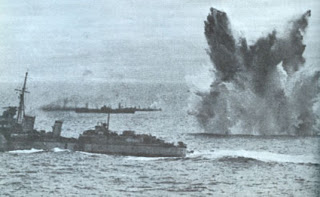
David Cameron’s decision to honour the Arctic convoy veterans is the right decision even if it was a long time coming. Mr Cameron told MPs he had accepted the recommendations of a review of military medals carried out by former diplomat Sir John Holmes. Russia’s gratitude to the naval and merchant navy veterans who ferried supplies to Murmansk and Archangel during the Second World War has long been noted.

The veterans risked their lives time and time again convoying crucial supplies through often atrocious weather and hostile seas to the hard pressed (then) Soviet Union, which was fighting for survival. The Foreign Office (and the Ministry of Defence) had previously repeatedly (under both Labour and Conservative Governments) blocked this move saying that it would break the rules surrounding acceptance of medals. The Russian Embassy had expressed its 'deep regret' at this decision, which was understandably been condemned by surviving convoy veterans, their families and supporters.

Between August 31, 1941 and May 22, 1945, some 78 Allied Arctic Convoy (more than 1,400 merchant ships escorted by ships of the British, U.S. and Canadian Navies) sailed to the ports of Murmansk and Arkhangelsk.  Some 85 merchant vessels and 16 Royal Navy warships were sunk by Nazi submarines and approximately 3,000 British servicemen were killed during the Arctic campaign.

The significance of lend-lease supplies for the Eastern front by Soviet-bound Arctic convoys and their role in defeating fascism is still emerging. The convoy veterans and the vital supplies they delivered were temporarily lost in the often hot rhetoric of the Cold War. Oleg Rzheshevsky, the Russian war historian, has noted that apart from everything else, the convoys were a powerful moral influence.

"The moral aspect of the Arctic Convoys meant a lot. This was an extremely important factor both for the army and for all our people as it signalled that we were not alone in that war but had strong allies such as Britain and the United States. This helped boost our troop morale on the battlefield and supported our people on the home front."

Successive Westminster governments had previously promised to create a medal, yet they all failed to deliver on their promise. The Russian Government has awarded our veterans three medals, the arctic convoys are now part of Russia’s school curriculum. The Russian Government and the Russian people understand the convoy’s importance, yet successive UK Governments seem to really struggle with this, at least until now.

Tuesday, 4 December 2012

TAX TO GO?

News that Starbucks is planning to change the way it operates so that it pays corporation tax in the UK will be a small crumb of comfort to ordinary tax payers. Starbucks despite having around one-third of the UK coffee shop market, has only paid corporation tax only once in the past 15 years. In its simplest form Corporation tax is paid by foreign companies on profits made in the UK. UK-based companies pay corporation tax on their taxable profits wherever they are made. Starbucks, sold nearly £400 million pounds worth of goods in the UK last year, but paid no corporation tax at all, because it transferred some of the money to a sister company in the Netherlands in the form of royalty payments, it bought its coffee beans from Switzerland and paid high interest rates to borrow money from other parts of the business.

Starbucks is throwing in the towel in relation to paying Corporation tax; this may be timely as the House of Commons Public Accounts Committee has produced a report calling for HM Revenue and Customs (HMRC) to "more aggressive and assertive in confronting corporate tax avoidance". Interestingly enough HMRC revealed that in 2011-12, £474.2 billion pounds worth of total tax revenue accrued to HM Revenue and Customs (the Department) which was £4.5 billion pounds higher than for the period 2010-11. Oddly enough there was a decrease in corporation tax revenue of £6.3 billion pounds.

The House of Commons Public Accounts  Committee also heard evidence from heard evidence from Google and Amazon. Amazon has a reported turnover of £207 million pounds for 2011 for its UK Company (Amazon.co.uk), on which it has shown a tax expense of only £1.8 million pound, yet showed a European-wide turnover of €9.1 billion for its Luxembourg based company (Amazon EU Sarl) and a tax of €8.2 million. Amazon.co.uk is a service company in the UK providing services to Amazon EU Sarl for which it receives payment. That company is owned by a holding company, which is a subsidiary of Amazon's group companies.

Amazon subsequently provided a copy of the unaudited accounts for Amazon Europe Holding Technologies S.C.S for 2011 showing a profit of €301.8 million and no tax payments.  Amazon also provided information showing that for 2011, £3.35 billion pounds worth of sales were from the UK, 25% of all international sales outside the USA.  Yet Amazon has over 15,000 staff in the UK, invoices UK customers from the UK, hires UK staff in the UK, has inventory physically in the UK for UK customers and to all intents and purposes has the majority of its economic activity in the UK, rather than in Luxembourg, but pays virtually no corporation tax in the UK.

The inability of HMRC to properly curb aggressive tax avoidance schemes which are costing the UK billions of pounds was flagged up by the National Audit Office (NAO) The NAO revealed that HMRC was dealing with a backlog of 41,000 cases involving individuals and small companies, with up to £10.2 billion pounds at stake. I am sure that the news that Con Dem Chancellor George Osborne plans to introduce a general anti-avoidance rule and hold talks with other G8 developed countries about clamping down on tax avoidance will make us all sleep soundly in our beds – perhaps not!

Tuesday, 13 November 2012

DON'T HOLD YOUR BREATH...

It started as a story in the Gruinad (The Guardian 13.11.2012) stating that the City watchdog, the Financial Services Authority, is now investigating claims by a whistleblower that the UK’s £300 billion wholesale gas market has been "regularly" manipulated by some of the big 6 power companies. The Guardian also notes that Ofgem (the energy regulator)  has been separately warned by a company responsible for setting so-called benchmark prices, ICIS Heren, that it had seen evidence of suspect trading on 28th September (this is end of the gas financial year) and gas prices on this date can have an important influence on future prices.

The claims suggest that dealers made unrealistic bids (on the 28th September) when information was being gathered to set the wholesale gas price, basically to suit their own trading position (maximise profits). The alleged manipulation is said to have reduced the wholesale price, and as such does not imply any knock-on impact on the retail price paid by customers. Later today the Con Dem Energy Secretary Ed Davey will make a statement to the House of Commons later as regulators investigate claims that wholesale gas prices have been manipulated.

Now the wholesale gas market includes everything from the UK's own North Sea gas supplies, to gas from Norway or elsewhere, or arriving in the UK by ship as LNG, liquefied natural gas. Energy companies buy gas at the wholesale price and then sell it on to businesses and domestic users. The cost of wholesale gas makes up the majority of our energy bills - 45% of the average energy bill is made up of the cost of wholesale gas, supply costs and profit margins.

The whistleblower, who worked for ICIS Heren, flagged up their concerns after identifying possible attempts to distort the prices reported by the company. These prices are especially important because many wholesale gas contracts are based on them and even small changes in the gas price can cost or save companies millions. These revelations come at an unfortunate time for UK’s energy sector, with many of the big six suppliers (the cartel) under fire for alleged profiteering on household energy bills and mis-selling on the doorstep. So far four of the UK's big six energy suppliers have released statements denying any involvement.

When it comes to regulation of the energy market the silence from the Con Dem Government has almost deafening. In the heady days of opposition, back in October 2009 the then Tory Energy Spokesman, Greg Clark (now Financial Secretary to the Treasury) stated that the "cartel" of the big 6 energy firms would be referred to the Competition Commission by a Conservative Government. He also  condemned the unacceptable lag between the cost of wholesale gas prices and household energy bills and noted that customers were on average being charged some £74 pound too much for their energy per year.

An 'independent' investigation into the Energy Company’s refusal to pass on reductions in wholesale energy prices to customers would still be welcomed by many hard pressed energy customers. As would the promised 'Energy Revolution' which was supposed to overhaul the energy sector billing structure and charges.

In many ways it is somewhat ironic that we find ourselves here, as a Conservative Government started the whole sorry mess in the first place, by privatising the energy market in the first place. This threw any rational energy pricing structure upon the whims of the 'market' by allowing the newly privatised energy companies to price gouge customers in the first place and since the effective demise of any real competition in the ‘market place’ we have all been regularly fleeced.

As for any inquiry into irregularities in the energy market, it is worth noting that once in Government that was consigned quietly to the too difficult pile. The pre-election pledge for an independent inquiry into the £25 billion-a-year energy industry (which has been subject to lengthy and repeated criticisms surrounding accusations of profiteering on electricity and gas) was quietly dropped by the Com Dem Coalition Government. So I won’t hold my breath.

Wednesday, 31 October 2012

A BROKEN PROMISE!

It’s quite simple really; Russia wants to award the Medal of Ushakov to Britain's Arctic convoy veterans as a symbol of Russia’s gratitude to the naval and merchant navy veterans who ferried supplies to Murmansk and Archangel during the Second World War. The veterans risked their lives time and time again convoying crucial supplies through often atrocious weather and hostile seas to the hard pressed (then) Soviet Union, which was fighting for survival.

The Foreign Office (and the Ministry of Defence) has repeatedly (under both Labour and Conservative Governments) blocked this move saying that it would break the rules surrounding acceptance of medals. The Russian Embassy has expressed its 'deep regret' at this decision, which has understandably been condemned by surviving convoy veterans and their families.

Between August 31, 1941 and May 22, 1945, some 78 Allied Arctic Convoy (more than 1,400 merchant ships escorted by ships of the British, U.S. and Canadian Navies) sailed to the ports of Murmansk and Arkhangelsk.  Some 85 merchant vessels and 16 Royal Navy warships were sunk by Nazi submarines and approximately 3,000 British servicemen were killed during the Arctic campaign.

The significance of lend-lease supplies for the Eastern front by Soviet-bound Arctic convoys and their role in defeating fascism is still emerging. The convoy veterans and the vital supplies they delivered were temporarily lost in the often hot rhetoric of the Cold War. Oleg Rzheshevsky, the Russian war historian, has noted that apart from everything else, the convoys were a powerful moral influence.

"The moral aspect of the Arctic Convoys meant a lot. This was an extremely important factor both for the army and for all our people as it signalled that we were not alone in that war but had strong allies such as Britain and the United States. This helped boost our troop morale on the battlefield and supported our people on the home front."

Many of the arctic convoy veterans are still with us, back in May 2010; surviving veterans were all awarded special medals by Russia in commemoration of the 65th anniversary of Victory over fascism. The awards ceremony took place aboard the historic Belfast cruiser, the last surviving UK warship that served the Arctic Convoys, a fresh reminder that World War II was not just a Soviet war, or a British war, but a common war against fascist tyranny.

Prime Minister David Cameron, just like the rest  of them has broken his election promise to create a special medal for veterans of the Arctic Convoys. Successive Westminster governments have promised to create a medal, yet have failed to deliver on their promise. The Russian Government has awarded our veterans three medals, the arctic convoys are now part of Russia’s school curriculum. The Russian Government and the Russian people understand the convoy’s importance, yet successive UK Governments seem to really struggle with this.

I think it’s time for the National Assembly to explore ways we can honour our surviving arctic convoy veterans.  I believe that we need to do this quickly because it is the right thing to do and because I sat for many hours listening (as a small child) to heavily edited stories from my great uncle, a naval veteran of the Arctic convoys to Russia and of much else. Our veterans should not be left out in the cold again, the medal needs to be created and awarded to the veterans and their families before it is too late.

Thursday, 25 October 2012

WORKING HARD FOR WALES?

The Party of Wales has criticised the lack of detail on borrowing powers to Wales provided by the joint statement issued by the UK and Welsh Governments. The statement follows twelve months of bilateral talks between the two governments. The party has also criticised the lack of a clear commitment to the reform of Barnett or a formula to fix the Barnett floor.

Ieuan Wyn Jones AM, the party’s Shadow Finance Minister said:

“The Welsh Government entered into the bilateral discussions with the twin aims of securing borrowing powers and fixing the Barnett floor at 115% of spending in England as originally proposed by Holtham. This statement shows that they have failed on both counts.

“Wales has already lost over 40% of its capital budget, and the economy is in crisis. We need to have borrowing powers immediately so that we can kick start the construction sector and boost jobs. The Treasury’s weasel words on borrowing shows that they have failed to grasp the enormity of the economic crisis we face with 50,000 young people unemployed. The statement doesn’t even tell us how much Wales will be allowed to borrow at some future unspecified date.

“The failure to agree a formula to fix the Barnett floor also shows that the Treasury is now clearly complicit in perpetuating the underfunding of Wales.

“This announcement has the Treasury’s paws all over it, and I can’t understand why any First Minister of Wales would sign up to it. I would have been ashamed to have signed up to this weak and bland statement. There is no mention at all of the longer term need for a wholesale reform of Barnett.”

Saturday, 13 October 2012

IN THE MONEY

Here we go again; British Gas has announced increases to the gas and electricity prices it charges customers. The company (a member of the ‘Big 6’ energy cartel) has announced that it will raise its charges for both gas and electric by around 6%, which will add around £80 a year to the average dual fuel bill, from the 16ht November 2012. This not unexpected decision follows SSE (which trades as Scottish Hydro, Swalec and Southern Electric) announcement that it will increase its domestic gas and electricity prices by an average of 9% from 15 October.

SSE (also one of the ‘Big 6’) has blamed the increases on the extra cost of using the gas and electricity networks and rising costs in energy wholesale markets. Around 3.4 million gas and five million electricity customers will be affected with an average standard dual-fuel bill will pay an extra £102 for the year, or £1,274 in total. Back in May 2012, British Gas, reported a 2% rise in annual pre-tax profits to £1.33bn, though profits in its division which supplies electricity and gas to homes and businesses fell 20% to £321.6m.

Npower has also joined its fellow cartel members (sorry colleagues) British Gas in and SSE by announcing it is increasing gas and electricity prices in the UK. Npower announced that it will increase the price of gas by an average of 8.8% and electricity by 9.1% from 26th November. And then there were three…

In 2011, all the big-six energy suppliers raised their prices, in some cases twice. Earlier this year the ‘Big 6’ all staged a token gesture round of small price cuts, which affected their gas or their electricity customers. SSE cut its gas prices by 4.5% in March this year. British Gas last raised its tariffs in August 2011, gas prices rose by 18% and electricity prices by 16%. Back in January 2012, it cut its electricity prices by 5%. Centrica (which owns British Gas) in May 2012 warned that continued increases in the wholesale price of gas might lead to renewed domestic price rises this autumn.

The silence from the Con Dem Government is almost deafening. Truly we have come a long way from the heady days of opposition, when back in October 2009 the then Tory Energy Spokesman, Greg Clark  (currently Financial Secretary to the Treasury) said that the "cartel" of the big 6 energy firms would be referred to the Competition Commission by an incoming Conservative Government. The then Tory Energy Spokesperson also condemned the unacceptable lag between the cost of wholesale gas prices and household energy bills - noting that customers were on average being charged some £74 pound too much for their energy per year.

An 'independent' investigation into the Energy companies refusal to pass on reductions in wholesale energy prices to customers would have been very welcome along with the promised 'Energy Revolution' to overhaul the energy sector billing structure and charges. Oddly enough a Conservative Government started the whole sorry mess in the first place, privatising the energy market in the first place. This threw any rational energy pricing structure upon the whims of the 'market' by allowing the newly privatised energy companies to price gouge customers in the first place?

Oddly enough that pre-election pledge for an independent inquiry into the £25 billion-a-year energy industry which has been subject to lengthy and repeated criticisms surrounding accusations of profiteering on electricity and gas, was quietly dropped by the Com Dem Coalition Government. Heaven forbid that principle get in the way of profit. No doubt in the next few weeks the other cartel members will feel duty bound to roll out energy price increases to their customers, I mean you have to keep the dividend up somehow and keep the shareholders happy.

Few of us this winter will have as snug and cozy a relationship with the energy companies as that which exists between the political parties within the Westminster village (and without) and the energy supply companies. Prior to the last Westminster general election, the Conservatives and the Liberal Democrats made repeated criticisms (and much political capital) from New Labour for its failure to tackle prices charged by the Big Six suppliers and repeatedly demanded an inquiry by the Competition Commission.

Sadly any faint hope that an inquiry into the nefarious activities of the energy supply cartel which might have had the power to reform the industry, encourage new entrants to break the hold of the Big 6 on the nominal free market and even possibly impose price caps quietly died in the summer months of  2010. Perhaps there should be an inquiry into the dubious (and financial rewarding) relationship between the Westminster based political parties and the representatives of the energy supply companies who are pretty keen to shower enough goodies around during Party conference season (and beyond) – perhaps not?

Wednesday, 22 August 2012

HEAT OR EAT AGAIN?

While we are enjoying the occasional (if fleeting) summer days, many of us are wondering about what our winter fuel bills will be like, especially if we have a bad winter. Some of us may face the stark choice of heating or eating this winter. Energy supply wise, we are now in the situation where we are now even more dependent upon imported gas from either unstable regions or dubious suppliers than ever before, and we the customers are facing increasingly expensive domestic energy bills.

News that research by Consumer Focus Wales now shows that a third of those asked described their energy bills as more of a worry than it was a few years ago will surprise few of us. The research shows that people on lower incomes, are unsurprisingly those most likely to be struggling to afford their energy bills. As has been previously noted the elderly and people in rural areas are also affected by increased energy bills. Almost 25% of people said energy bills needed only to go up by another £120 (a 10% increase) and they would also be struggling to afford the payments.

The stats make grim reading, the regulator Ofgem, has said that household energy bills have effectively doubled since 2002 and are now £1,250 per year. Back in 2008 the industry’s average dual fuel bill for both electricity and gas was £885. The ‘Big Six’ energy supplier’s cartel announced cuts of 5% in either their electricity or gas prices, but, this failed to reverse the years of price increases.

Consumer Focus Wales research shows that the proportion of people in Wales falling in to debt with suppliers is actually rising. Some 8% of energy consumers say they have fallen behind with energy bill payments in the last year – this figure rises to one in seven among young people and lower income households. Back in 2010 Consumer Focus Wales found that 5% of people were in arrears on their gas and electricity payments.

Back in February and March one by one of the 'Big Six' quietly announced a raise in profits at a time when many people were trying to avoid or to live with fuel poverty, something that was never going to go down well with hard presser domestic energy customers. Centrica (who own British Gas) revealed a group operating profit of £2.5 billion pounds, up four percent on 2010.

This unfortunately timed announcement came against a backdrop of growing fuel poverty, which affected (at the time) around 5.5 million households in the UK. The definition of Fuel poverty is when a household spends more than ten percent of their disposable income on gas and electricity. Fuel poverty is one of those things that the previous (and former) New Labour Government and the current Con Dem Government have done nothing about and no doubt quietly hope will go away or that the rest of us will continue to suffer it in relative silence.

Nothing has been done or will be done to curb or regulate excessive profits from the energy companies via windfall tax. The talk about customers benefiting from dual fuel bills, etc, is little more than a distraction. We have had a dual political failure, something that speaks volumes as to how far both the former New Labour Government and the Conservatives (and their Lib Dem coat holders) have gone to drop even the pretence of standing up for the interests of ordinary people in favour of courting the City.

It looks like we are going to get hit by another rise in domestic energy bills, kicked off this time by SSE, (Scottish Hydro, Swalec and Southern Electric) who have announced that they will increase its domestic gas and electricity prices by an average of 9% from October 15th. I'll bet the City and the shareholders will be happy, unlike the rest of us.

For growing numbers of ordinary people this winter it may come down to a choice of heat or eat, literally choosing between putting food on the table and heating their home. The only real winners here are HM Government (with extra tax) and the big six energy companies (with fat profits) all of us as customers are losing out hand over fist as the energy cartel continues to ramp up its profits.

Wednesday, 8 August 2012

TELL ME WHEN ITS OVER?

The rumbles of discontent within the Con Dem Coalition have been decidedly detectable for quite awhile. So the news that the largely Lib Dem Plans to reform the House of Lords (awaited since 1910) have been dropped after Conservatives "broke the coalition contract" should not surprise many disinterested observers. It has all been reminiscent of being a distant observer to a slow car crash, in that you can see that is happening but there is nothing you can do about preventing it.

While I have no problem with either sweeping the anachronism that is the House of Lords into oblivion or making it entirely democratic, in the current economic climate the prospect of Lords reform keeps few aside, from political anoraks, awake at night, there are literally more important things to worry about. The fact that, Lib Dem leader, Nick Clegg announced that agreement on an elected Lords could not be reached with fellow Conservative coalition members must surely add a little extra sting.

Nick Clegg stated that plans would be shelved rather than face a "slow death". Getting his retribution in quickly, the Lib Dem leader said Lib Dem MPs could not now support Conservative-driven changes to Commons boundaries in 2015. Even David Cameron has admitted that things are not going to well with the Lib Dems.

Aside from deep (almost vindictive Tory driven) public sector cuts and enforced public sector job losses, the coalition has failed to really deliver anything for the Lib Dems. Yet the coalition may last for a while longer as some Conservative and Lib Dem MPs may be reluctant to face the prospect of electoral oblivion at the of the electorate (for both the Tories and the Lib Dems) may concentrate the mind.

Tuesday, 31 July 2012

A PRIVATISATION TOO FAR...

Perhaps the Con Dems think that height of Olympic-mania is a good time to bury bad news, and that few will notice yet another questionable privatisation, in this case the tendering of contracts for the UK’s air sea search and rescue helicopter service. Three companies are competing for contracts to provide search and rescue helicopter services throughout the UK.

The contract winner, or contract winners, would take over from Royal Navy and RAF and operate from sites across the UK. Three companies, Bond Offshore Helicopters, Bristow Helicopters and CHC Helicopter are on the shortlist published by the Department of Transport. The UK Westminster government hopes to reveal the winners early next year.

The business, has been broken up into three lots, which include covering coastguard duties.
  • Lot one is to deliver the service at, or near, Sumburgh, Stornoway, Culdrose, Leconfield and Valley using helicopters with a minimum rescue capacity of eight casualties per aircraft.
  • Lot two is to deliver the service from Lee-on-the-Solent and at, or near, Chivenor, Prestwick, Lossiemouth and Wattisham using helicopters with a minimum rescue capacity per aircraft of four casualties per aircraft.
  • Lot three is a contract covering the requirements of both lots one and two.
This is in my opinion a privatisation too far and reveals the full extent of this Governments slightly crazed ideologically driven desire to privatise almost everything, what’s next the privatisation of the Police Service?