Showing posts with label Global warming. Show all posts

Friday, 29 January 2016

REDEFINING DULL

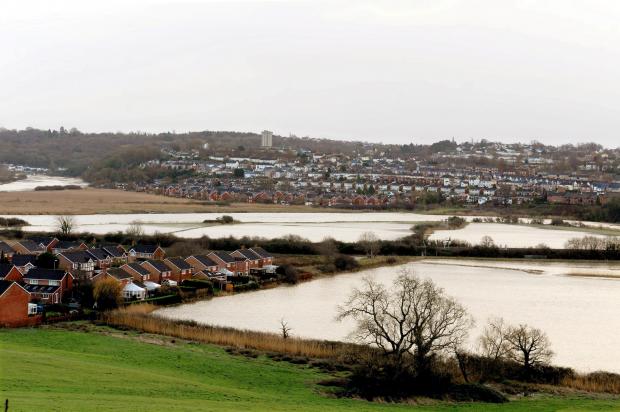
A close call near Caerleon, near Newport in the lower Usk Valley
It’s been a bad winter for floods, with the north of England and southern Scotland getting particularly badly hit, along with parts of Wales, and we are only halfway through. As has been noted previously there can be no blank cheque for flood defences; we need to make rational and cost effective sustainable choices when it comes to coastal defence. We need to decide how we are going to deal with the weather related effects of a warming world with expanding and rising oceans.

Now I am not suggesting for a moment the wholesale abandoning of large tracts of our country to the ravages of the ocean, although unless climate change is taken on then we may end up facing that eventuality. Rather we need to make rational long-term sustainable choices about flood defence and the development of a comprehensive planning system for our country. At a time when several of our councils are considering building on known flood plains the issue of flooding remains important.

We need to actively build in flood prevention / flood avoidance into as the planning application process and make efforts to avoid building in those areas that are vulnerable (or will be vulnerable in the future) to flooding or at least build to take into account the possibilities of flooding. If we are going to build on flood plains or other areas that are vulnerable to flooding then we must use flood resistant or flood hardened modern intelligent design and building techniques to reduce potential future damage, loss and inconvenience as is done elsewhere. 

The UK mainland has around 5,000 miles of coastline, not all of which is inhabited or at prime risk, but even so, going Dutch with wholesale widespread sea defences would be an expensive option for Wales, let alone the UK. Now those coastal roads and railways that are at regular risk of being damaged by a combination of bad weather and high tides may well need to be re-routed.

In Wales we do need to take a longer view and seriously consider the possibilities of relaying railway lines and building roads away from those more vulnerable coastal areas. Additionally we need to harden our power network and our communities to the effect of severe weather events. That said we are in a much better position to make more rational coastal defence choices than some countries in the developing world and to seriously consider just exactly where we put key infrastructure.

The quick fix (and short term gain) may be one of our biggest problems here in Wales along with the lack of sensible detailed all Wales development planning. Across the border, Westminster’s institutionalised short term view led to the cutting of £500 million pounds from the Environment Agency budget (between 2010 and 2013, and at the time (in 2014) anticipated another ‘saving £ 300 million pounds by 2015 and the cutting of some 1,500 jobs.

The Pacific island nations and Bangladesh will face the potentially catastrophic social, economic and political consequences of rising and expanding oceans before we will.  Even the Dutch have after over 500 years of experience trying come to the conclusion that in some cases it is better to build in flood room, setting aside some coastal wetlands and other land as places that will be allowed to flood to take the pressure of other areas. 

Coastal flooding and bad weather may hit some parts of our country hard, other areas may literally dodge the storm, but we may not be so lucky all the time. Westminster budget cuts mean (which are unlikely to be reversed) that in England (in in Wales) there will be less money, less resources and less people to work to prevent future floods. We in Wales cannot afford that short of dull short term thinking... we need to start the process of better flood prevention now 
before the next time.

Thursday, 9 January 2014

GOING DUTCH?

As has been noted elsewhere there can be no blank cheque for flood defences; we need to make rational and cost effective sustainable choices when it comes to coastal defence. We need to decide how we are going to deal with the weather related effects of a warming world with expanding and rising oceans. Now I am not suggesting for a moment the wholesale abandoning of large tracts of our country to the ravages of the ocean. Rather we need to make rational long term sustainable choices about flood defence and the development of a comprehensive planning system for our country. 

After the flooding...
We need to build in flood prevention / flood avoidance as part of the planning system and make efforts to avoid building in those areas that are vulnerable to flooding or at least build to take into account the possibilities of flooding. If we are going to build on flood plains or other areas that are vulnerable to flooding then we must use flood resistant or at least flood hardened modern intelligent design techniques to limit potential future damage, loss and inconvenience as is done elsewhere. 

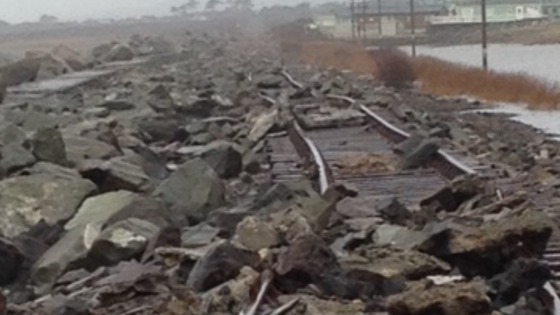
Our country has around 5,000 miles of coastline, not all of which is inhabited or at prime risk, but even so, going Dutch with wholesale widespread sea defences would be an expensive option for Wales, let alone the UK. Now those coastal roads and railways that have been damaged by the recent combination of bad weather and high tides will be repaired in the short term.

We in Wales do need to take a longer view and seriously consider the possibilities of relaying railway lines and building roads away from those more vulnerable coastal areas. Additionally we need to harden our power network and our communities to the effect of severe weather events. That said we are in a much better position to make more rational coastal defence choices than some countries in the developing world and to seriously consider just exactly where we put key infrastructure.

The quick fix (and short term gain) may be one of our biggest problems here in Wales along with the lack of sensible detailed all Wales development planning. Across the border, Westminster’s institutionalised short term view led to the cutting of £500 million pounds from the Environment Agency budget (between 2010 and 2013, and anticipated another ‘saving £ 300 million pounds by 2015 and the cutting of some 1,500 jobs. I suspect that in the wake of the last few weeks the Con Dems may revisit this...


The Pacific island nations and Bangladesh will face the potentially catastrophic social, economic and political consequences of rising and expanding oceans before we will.  Even the Dutch have after over 500 years of experience trying come to the conclusion that in some cases it is better to build in flood room, setting aside some coastal wetlands and other land as places that will be allowed to flood to take the pressure of other areas. 

A close call near Caerleon, near Newport in the lower Usk Valley
Some parts of our country got hit hard by the recent coastal flooding and bad weather, other areas literally dodged the bullet , we may not be so lucky next time. Westminster budget cuts mean (unless they are reversed) that in England there will be less money, less resources and less people to work to prevent future floods. We in Wales cannot afford that short of dull short term thinking... we need to start the process of better flood prevention now before the next time.

Monday, 26 September 2011

THE ANTHROPOCENE EPOCH (AND SURVIVING IT)

Humans have now reached that point in our (and the planet's) history where we are shaping almost every aspect of the planet, and not always in a good way. We have done this before, but, never on an industrial scale, so we are in wholly new territory - an era that could be called the Anthropocene Epoch.  Will Steffen, who is the executive director of the Australian National University (ANU) Climate Change Institute. Prof Will Steffen, at the Sustainable Cities, Sustainable Transport forum (in March 2009), gave an interesting detailed overview of the multiple challenges we face if we are to continue to prosper on this planet, entitled Surviving the anthropocene, which is well worth listening too.

Wednesday, 10 August 2011

REWRITING THE PLOT?

There are over 4,000 people in Wales still waiting for allotments, this number has not dropped in the last two years. The National Society of Allotment and Leisure Gardeners (with 5,000 members in Wales) argue that there needs to be more emphasis on providing allotments.
Now there is an old adage about thinking globally and acting locally - the issue of allotments may be one of those local actions that can have far reaching consequences. I mention this because the UK Westminster government back in January 2010 revealed it's twenty year food strategy.

None of us should take our food supply for granted - back in March 2009, Professor John Beddington (Westminster Government adviser) predicted the possibilities of a climate change-induced "perfect storm". This is where a combination of food shortages, water scarcity and insufficient energy resources combine to drop us all right in it. Now this something that's been around for a while, but, the UK Westminster mindset, so it took a while for any sort of coherent response to emerge.

On a very local level, one of the simplest ways to make very basic preparations for ourselves to deal with the consequences of potentially rocketing food and oil prices, which many scientists believe are not that far away in the near future as a result of peak oil, is for as many people as possible to grow some of their own food. There are long waiting lists for allotments in all areas of Wales. Whatever demand is there should be encouraged.

A few years ago there were moves to try to increase the amount of land available for food production, Plaid’s then Rural Affairs Minister; Elin Jones looked for ways to increase the availability of land for allotments and community gardens. The Westminster government’s somewhat
belated call for less food waste, more seasonal food and for people to buy sustainably-farmed food is to be welcomed.

While the idea of a food strategy has been welcomed, we have to be realistic, as food price problems could hit us pretty quickly and with little warning. It makes logical sense for governments to help, encourage and enable communities on as small a scale as possible to build in their own resilience and their own resources so they can cope with a potential food or fuel crisis themselves.

However, we need to go much further and faster in terms of reducing food imports and avoiding food waste. Providing land for allotments to our communities, especially as the demand for allotments continues to grow apace would help. I am well aware of as a significant number of my friends, relatives and various acquaintance’s (in Newport, Torfaen and Monmouthshire and elsewhere) all have allotments, or are trying to acquire them, so I am aware of the length of time it takes to acquire a plot.

It's not just about providing a ready source of vegetables and saving money, there are other benefits from raising and looking after your own crops as the process actually provides a degree of necessary exercise, a good excuse to get stuck in a social context. Early in 2009, Plaid AM Leanne Wood produced research which showed that some people may well have to wait for nearly nine years before they get a sniff of a plot or pitch.

What I still find amazing is that the whole business of allotments is still largely regulated by legislation from the early years of the 20th Century. The 1908 Small Holdings and Allotment Act says a council has a duty to provide land if they are satisfied there is demand and if six electors petition that council, their representations have to be taken into consideration.

There are enough examples across Wales, where groups of interested people have petitioned their local council only to be told that the council has considered their request, but there is no land available and some examples where local authorities have made land available. This if nothing else shows a complete lack of anything like a consistent approach to the provision of allotments.

Clearly our local authorities need to sort themselves out when it comes to the provision of land for allotments and help people to help themselves. The Welsh Government has included allotment provision in its legislative priorities for the next five-year assembly term and says it will set out plans to ensure minimum standard for the amount of land Welsh councils should devote to allotments. This should be a win! win! for everybody - so get it done!