Showing posts with label public sector spending cuts. Show all posts

Friday, 29 January 2016

REDEFINING DULL

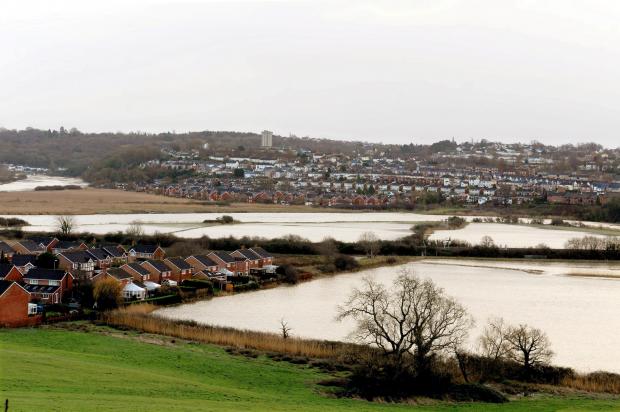
A close call near Caerleon, near Newport in the lower Usk Valley
It’s been a bad winter for floods, with the north of England and southern Scotland getting particularly badly hit, along with parts of Wales, and we are only halfway through. As has been noted previously there can be no blank cheque for flood defences; we need to make rational and cost effective sustainable choices when it comes to coastal defence. We need to decide how we are going to deal with the weather related effects of a warming world with expanding and rising oceans.

Now I am not suggesting for a moment the wholesale abandoning of large tracts of our country to the ravages of the ocean, although unless climate change is taken on then we may end up facing that eventuality. Rather we need to make rational long-term sustainable choices about flood defence and the development of a comprehensive planning system for our country. At a time when several of our councils are considering building on known flood plains the issue of flooding remains important.

We need to actively build in flood prevention / flood avoidance into as the planning application process and make efforts to avoid building in those areas that are vulnerable (or will be vulnerable in the future) to flooding or at least build to take into account the possibilities of flooding. If we are going to build on flood plains or other areas that are vulnerable to flooding then we must use flood resistant or flood hardened modern intelligent design and building techniques to reduce potential future damage, loss and inconvenience as is done elsewhere. 

The UK mainland has around 5,000 miles of coastline, not all of which is inhabited or at prime risk, but even so, going Dutch with wholesale widespread sea defences would be an expensive option for Wales, let alone the UK. Now those coastal roads and railways that are at regular risk of being damaged by a combination of bad weather and high tides may well need to be re-routed.

In Wales we do need to take a longer view and seriously consider the possibilities of relaying railway lines and building roads away from those more vulnerable coastal areas. Additionally we need to harden our power network and our communities to the effect of severe weather events. That said we are in a much better position to make more rational coastal defence choices than some countries in the developing world and to seriously consider just exactly where we put key infrastructure.

The quick fix (and short term gain) may be one of our biggest problems here in Wales along with the lack of sensible detailed all Wales development planning. Across the border, Westminster’s institutionalised short term view led to the cutting of £500 million pounds from the Environment Agency budget (between 2010 and 2013, and at the time (in 2014) anticipated another ‘saving £ 300 million pounds by 2015 and the cutting of some 1,500 jobs.

The Pacific island nations and Bangladesh will face the potentially catastrophic social, economic and political consequences of rising and expanding oceans before we will.  Even the Dutch have after over 500 years of experience trying come to the conclusion that in some cases it is better to build in flood room, setting aside some coastal wetlands and other land as places that will be allowed to flood to take the pressure of other areas. 

Coastal flooding and bad weather may hit some parts of our country hard, other areas may literally dodge the storm, but we may not be so lucky all the time. Westminster budget cuts mean (which are unlikely to be reversed) that in England (in in Wales) there will be less money, less resources and less people to work to prevent future floods. We in Wales cannot afford that short of dull short term thinking... we need to start the process of better flood prevention now 
before the next time.

Tuesday, 13 May 2014

GONGS AND TAXES

No doubt much to the irritation of David Cameron and Ed Milibland tax evasion is back in the news – this time in relation to Take That singer Gary Barlow. At the end of the day it is a matter of semantics and legality when it comes to the differences between tax evasion from tax avoidance, one is a criminal act and one is permitted under the law.  

It is a matter of public record that the PM is against aggressive tax avoidance schemes. He has also been pretty forthright in stating that tax evasion is illegal, and that people can be prosecuted for that, and people can go to prison.

It is also a matter of public record that the Con Dem government ill-advised and perhaps ideologically driven public sector spending cuts have seriously cut staffing levels in HM revenue and Customs. The PM interestingly enough was pretty firm when it came to rejecting calls for particular individuals are stripped of public honours for wrong doing. If you started stripping individuals of titles and honours for wrong doings heaven knows where you might end up even the possibility of party donors ending up embarrassed not to mention devaluing legitimate honours awarded to deserving recipients.

Previously various Westminster governments have been a little half-hearted when it comes to clamping down on tax avoidance. The current PM may have slagged off celebrities, for using a tax avoidance scheme in Jersey. Yet he has seemed to be acutely reluctant to deal the tax havens that happen to be UK Crown Dependent territories. 

Most reasonable people accept that there is a real need to deal on a global basis with the problem of off-shore companies and those individuals who are actively engaged in tax avoidance, tax evasion and / or money laundering. It’s all a little embarrassing as the problem is that the UK is at the heart of the problem and has chosen not to regulate its own crown dependencies let alone the periodically iffy if not criminal goings on in the City. 

The scale of the on-going off-shore tax avoidance problem may leave you breathless. The Cayman Islands were home to some 12,000 corporations yet have a resident population of 50,000. They were home to around 70% of the planets hedge funds (as of June 2012). The British Virgin Islands with a population of some 22,000 people just happens to be home to some 823,502 registered companies.

General Electric who paid no tax in 2010, made a $14.2 billion dollar profit. Barclay's had 181 subsidiaries (as of June 2012) registered in the Cayman Islands and paid little UK tax on its worldwide profits. News Corp managed to base 152 subsidiaries in tax havens across the planet (according to the US Government) and yet managed to pay no UK corporation tax between 1998 and 1999.

US President Obama was 100% right to suggest that the governments of the world should jointly tackle the issue of tax evasion and tax havens. By tackling the tax havens, the tax avoidance and the questionable dealings of the derivative traders, hedge funds and the off balance sheet trading then we might go so way towards dealing with the consequences of the worldwide financial crash. Yet that nice Mr Cameron and the other 18 millionaires in the cabinet have pretty much stalled when it comes to closing the tax loopholes.

The BVI has incorporated more than a million such offshore entities since it began marketing itself worldwide in the 1980s. Company owners' true identities are never revealed. Even the island's official financial regulators normally have no idea who is behind them. The British Foreign Office depends on the BVI's company licensing revenue to subsidise this residual outpost of empire, while lawyers and accountants in the City of London benefit from a lucrative trade as intermediaries, claiming that the tax-free offshore companies provide legitimate privacy.

Thursday, 10 April 2014

THIS MAKES A PLEASANT CHANGE

There is an old saying along the line of if you stand in the same place long enough then eventually everything will go passed you again. The re-opening of several Gwent police stations by Ian Johnston, the local police and crime commissioner (PCC) , should be welcomed. This bold decision and effectively reverses cuts made  to front desk services at the seven stations (out of 17 stations) that were originally closed to the public back in 2012 (with the loss of 19 jobs). The package of cuts was originally aimed to save around £500,000 as part of £34 million pounds worth of budget savings (by 2015). Gwent Police are reopening Police stations in Caerphilly, Chepstow, Maindee, Monmouth, Pontypool, Risca and Ystrad Mynach. The changes mean that Abertillery police station will now be open to the public on Thursday and Friday from 09:00 to 17:00, with Brynmawr open Monday to Wednesday from 09:00 to 17:00, it is worth noting that previously both these Police stations had only been open for a few hours a week. In Monmouthshire,  Monmouth and Chepstow police stations are also now open to the public from 9am to 5pm, five days a week. Initially the station front counters will be staffed by community support officers (CSOs) until Gwent Police recruit station enquiry officers (SEOs). Front counter services are to be reviewed after 12 months and levels of us will also be monitoured. I for one, hope that this bold step works out, and some of our communities can retain their (open) police stations.

Thursday, 9 January 2014

GOING DUTCH?

As has been noted elsewhere there can be no blank cheque for flood defences; we need to make rational and cost effective sustainable choices when it comes to coastal defence. We need to decide how we are going to deal with the weather related effects of a warming world with expanding and rising oceans. Now I am not suggesting for a moment the wholesale abandoning of large tracts of our country to the ravages of the ocean. Rather we need to make rational long term sustainable choices about flood defence and the development of a comprehensive planning system for our country. 

After the flooding...
We need to build in flood prevention / flood avoidance as part of the planning system and make efforts to avoid building in those areas that are vulnerable to flooding or at least build to take into account the possibilities of flooding. If we are going to build on flood plains or other areas that are vulnerable to flooding then we must use flood resistant or at least flood hardened modern intelligent design techniques to limit potential future damage, loss and inconvenience as is done elsewhere. 

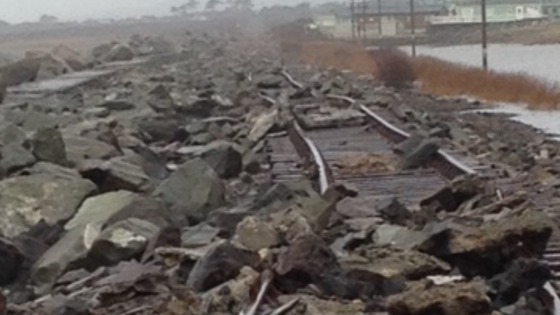
Our country has around 5,000 miles of coastline, not all of which is inhabited or at prime risk, but even so, going Dutch with wholesale widespread sea defences would be an expensive option for Wales, let alone the UK. Now those coastal roads and railways that have been damaged by the recent combination of bad weather and high tides will be repaired in the short term.

We in Wales do need to take a longer view and seriously consider the possibilities of relaying railway lines and building roads away from those more vulnerable coastal areas. Additionally we need to harden our power network and our communities to the effect of severe weather events. That said we are in a much better position to make more rational coastal defence choices than some countries in the developing world and to seriously consider just exactly where we put key infrastructure.

The quick fix (and short term gain) may be one of our biggest problems here in Wales along with the lack of sensible detailed all Wales development planning. Across the border, Westminster’s institutionalised short term view led to the cutting of £500 million pounds from the Environment Agency budget (between 2010 and 2013, and anticipated another ‘saving £ 300 million pounds by 2015 and the cutting of some 1,500 jobs. I suspect that in the wake of the last few weeks the Con Dems may revisit this...


The Pacific island nations and Bangladesh will face the potentially catastrophic social, economic and political consequences of rising and expanding oceans before we will.  Even the Dutch have after over 500 years of experience trying come to the conclusion that in some cases it is better to build in flood room, setting aside some coastal wetlands and other land as places that will be allowed to flood to take the pressure of other areas. 

A close call near Caerleon, near Newport in the lower Usk Valley
Some parts of our country got hit hard by the recent coastal flooding and bad weather, other areas literally dodged the bullet , we may not be so lucky next time. Westminster budget cuts mean (unless they are reversed) that in England there will be less money, less resources and less people to work to prevent future floods. We in Wales cannot afford that short of dull short term thinking... we need to start the process of better flood prevention now before the next time.

Thursday, 6 December 2012

WAITING FOR THE GLIMMER MAN...

Yesterday we were waiting with no particular degree of anticipation for Chancellor George Osborne to inform MPs (and the rest of us) that there was no "no miracle cure" to the UK's economic woes in his Autumn Statement. The Chancellor made his statement against a pretty grim economic background when compared with his budget forecast made last March in the Budget. Mr Osborne continued to state that the coalition was continuing to "confront the country's problems" and was hard at work reducing the deficit.

The cancellation of the proposed 3 pence a litre increase in fuel duty may help a little and the  extra £227 million pounds for capital projects is useful it does little to redress fair funding for Wales. When it comes to growth being predicted to be -0.1% in 2012, down from the 0.8% prediction in the Budget in March we are truly in the realm of old style Soviet economic statistics. I suspect that some of the Con Dems (the Cons rather than the Dems I suspect) actually believe that austerity is the answer to the economic disaster left behind by Gordon Brown (and New Labour).

The party formerly known as New Labour predictably called the government's economic policy "a terrible failure” not that they would have done anything different if Gordon had managed to pull the electoral fat out of the fire back in 2010. What’s pretty clear from all of this is that the Con Dems are out of ideas, there was not really a Plan A, so there is little likelihood of a Plan B and clearly no desire to sort out the ongoing UK’s problem with tax evasion. So much for being all in it together.

Almost unnoticed by the UK’s self Anglo centric media the Irish Government presented its sixth austerity budget since the banking and economic collapse. Tax rises and spending cuts were announced as the government aims to save another 3.5 billion euro (around £2.8 billion). All of the so called economic "low-hanging fruit" has been picked clean after four harsh years of austerity. A new property tax (set at 0.18% of the value of a home up to 1 million euros (£800,000 pounds or $1.3 million dollars) and cuts to the health and social welfare budgets are planned.

Since 2010, Ireland, following an international bailout, has been forced to follow strict spending limits set by the EU and International Monetary Fund. The Irish government stated that it would meet its deficit reduction target for 2012 and that it  projected a budget deficit of 8.2%, compared with a target of 8.6%. Therefore the deficit would continue to fall steadily to 2.9% by 2015, it added. Irish economic forecasts (unlike on this side of the Irish Sea) were based on economic growth of 1.5% in 2013, rising to 2.9% growth by 2015.

Ireland is no Greece and while it has been riot it has not been protest free. The evident anger (if not quiet rage) at the bankers and the elites abject criminality and sheer folly may have been sidelined at the prospect, after hard years, by some light at the end of Ireland's dark economic tunnel, but, I suspect that it won’t be forgotten. Despite some economic glimmers  there are still plenty of people across the Celtic Sea who are less than happy with the choices made by the Irish elite and the fact that they have largely got away without punishment for their crimes, misdemeanour's and bad decisions.

There have been calls for a new republic and a fresh start literally writing off the past (and the debt) in a simular manner to Iceland. in ‘Towards a Second Republic’, Peadar Kirby and Mary Murphy exposed the winners and losers from the current Irish model of development and related the distributional outcomes of the use of power by Irish elites. It’s analysis of Ireland's economics, politics and society, draws some important lessons from its cycles of boom and bust. They also look at the role of the EU and compare Ireland's crisis and responses to those of other states.

The book (which is well worth a read) also includes proposals to construct new and more effective institutions for the economy and society are also included. Considering (somewhat closer to home) that  there have been no real consequences (or punishments for that matter) for the banking crash for the inhabitants of the Westminster village or the bankers (save for the loss of the odd bonus), I suspect that it won't be on the Christmas reading list of any elite reasonably near here.

Monday, 11 June 2012

SAVE THE WELSH CAVALRY

Save the Welsh Cavalry
The Conservatives (sorry Con Dems) have a bad habit of making defence cuts at moments when it would be better strategically to pause for thought. As part of the package of public sector spending cuts, to bail out the banks, the army is now going through a process of downsize to meet the new budget cuts. One result of these cuts is that a number of army regiments will be amalgamated or disbanded. Now there is nothing wrong with cutting ones cloth to match reality, that is something that the UK should have been done years ago.

Hasty ill thought out defence cuts have a tendency to come back and bite you further down the line. These defence cuts, at a time of significant military commitment overseas, should be properly thought out and balanced with a realistic medium to long term assessment of potential future strategic needs. That is sadly not what we have, any defence cut or reduction in military strength should be well thought out and any cuts should be balanced regionally rather than being over focused on Wales.

Our country has and continues to provide some of the finest soldiers for the Army in numbers which are greater than the population of Wales would indicate. Wales has four Regiments and only one Cavalry Regiment, 1st The Queens Dragoon Guards (the QDG). This Regiment recruits some 75% of its solders from all parts of Wales. Welsh families have a long tradition of serving in the Regiment and the consequent benefit for employment in Wales.

Losing the QDG is not a sensible option, aside from the fact that no one in Wales will be able to serve in a Welsh Cavalry Regiment. The loss of the regiment will have significant economic knock on effects, with redundancies, something that will not help in these grim economic times. Once if these cuts go ahead then once again Wales will lose out, tradition will wither, and potentially 500 jobs will be lost.

The UK Prime Minister, faced with a well organised and focused Scottish response has apparently indicated that he does not want to see any of the Infantry or Cavalry regiments in Scotland removed. When it comes to Wales, which is often out of sight and out of mind as far as many Westminster Governments are concerned, there has been no clear answer as to the fate of the QDQ. This is clearly unacceptable.

http://www.savethewelshcavalry.com/

Monday, 4 April 2011

THE PARTY FORMERLY KNOWN AS NEW LABOUR

The Labour Party (once formerly known New Labour) are quietly hoping that people will simply forget the terrible mess they created when they were in power at Westminster and the cuts they would have  implemented had they not been deservedly thrown out by the electorate. New (and Old) Labour were pretty good on sound-bites but well short on actual delivery, Harold Wilson, once talked about "The white heat of the technological revolution" (on October 1st 1963) yet once the dust had settled after six years of Labour Government very little had changed and very little was delivered as vested interests in the Labour Movement thwarted any real economic reform.

History has almost repeated itself, save for that now after nearly 13 years in power the Labour Party is now back wallowing in its comfort zone, safely out of office at Westminster, safely free from responsibility, they are enjoying what they love to do best – attacking the Tories. And talking up the Tory threat (as well practised by Peter Hain) in the Welsh General election is Labour's bottom line and works along the line of if you tell a simple big enough lie often enough then people will eventually believe it.

There is a long history of to the Labour sound-bite, Harold Wilson said in his 1961 Labour Party Conference speech "The Labour Party is a moral crusade or it is nothing". It seems that the answer is that it is nothing. More recently Tony Blair said "It is not an arrogant government that chooses priorities, it's an irresponsible government that fails to choose". New Labour consistently failed to choose to act to make Wales better and consistently choose to put Party interest before principle and the interests of the people of Wales.

At one very basic level, why not? There is certainly a great deal to attack the Tories (and their Liberal Democrat little helpers) for when it comes to our public services and our economy. But do Labour, not so New, Not so New Labour or whatever they choose to call themselves actually have any real credibility when it comes to attacking the Tories on these issues?

Certainly the party formerly known as New Labour's recent history is marked by a series of of opportunities wasted by Labour in government, the things they could have done, and were supposed to fight for, but chose not to. Fair funding for Wales under Labour, so that would be a No then. Electrifying the Great Western from Swansea to London, that would be a very reluctant Yes, but only after Plaid (and Ieuan Wyn Jones) put them in a situation where they had no other option - originally they planned to electrify the Great Western from Bristol to London - perhaps they helped that we in Wales would not notice.

To sum up, Labour are the 'friends' who are never there when you need them. Labour was the friend that the people of Wales turned to for the best part of one hundred years when faced with economic and political adversity. Through strikes, recession, the Thatcher and Major years the people sought comfort from their natural political home and got scant reward for it during the 13 years of Labour Government. New Labour did nothing to curb the irresponsibility of the bankers and little to support our manufacturing industry and or small to medium sized businesses, that are the lifeblood of much of the Welsh economy.

When given the opportunity (and the Westminster majority to match) to implement real and lasting improvements to the lives of its loyal supporters, New Labour was the friend that offers warm words in opposition, but is never there when you really need them, when they actually had the power to deliver for the Welsh people, they chose not too. Come the 5th May, we all to remember New and Old Labour's failure to deliver for Wales, and cast our votes accordingly.

Saturday, 29 January 2011

GWENT POLICE BUDGET CUTS

News that Gwent Police are to face cuts of more than £24 million over the next four years is not good news. this is a direct consequence of the Con Dem Westminster government's recent comprehensive spending review, which as everyone knows has seriously slashed public spending across the board. Gwent Police are now going to be engaged in a prolonged bout of belt tightening as the force comes to terms with seriously reduced funding.

The South Wales Argus (27.01.2011), notes that Gwent Police will announce its budget plans on the 9th February, when some of the detail as to how the force will cut some £3 million in 2011/12 on top of potential savings of £7.6 million made in 2010/11. The budget for 2010/11 was set at £121.616 million. The Argus also notes that the outgoing Chief Constable Mick Giannasi stated that officer numbers would not be cut during this financial year. Gwent Police Authority members were told that while the official figure is £22 million, the force has to allow ten percent cushion for any alterations in costs so in reality the figure is £24.6 million.

Retention of police Officers, on and off the beat, and civilian support staff should be the bottom line. Once you go down the line of cutting civilian support staff, which some may consider an easier and slightly more acceptable situation than reducing police numbers, there will be consequences. A reduction in civilian support staff numbers will inevitably lead to a reduction in the availability of operational police officers, which will have consequences for all of us.

Policing, just like everything else is driven by funding - this is the reality of modern (and old time) policing, our hard pressed Police Service (whether in Gwent, South Wales, Dyfed-Powys or North Wales) all need additional funding and an increase in the number of serving officers. On top of that our Police Officers actively need the active support of our communities, especially if we are seriously going to deal with crime and anti-social behaviour and to ensure proper Policing within our communities.

Now there is absolutely no reason why we cannot be far more creative when it comes to how are Communities are policed. We certainly need a more flexible approach to shift patterns to tackle those periods of the day when higher levels of criminal offences take place and need to actually respond to local communities real concerns rather than the Ministry of Justice's (formerly the Home Office) perceived priorities and targets.

We need to avoid repeating the mistakes of the past when it comes to basing Policing strategies on core or periphery because the end result is that some of our our communities will lose out when it comes to access to Police services and resources. If we want to curb crime in Wales, then it makes sense for the control of Policing as well as Justice and Prisons within Wales to be fully devolved to the National Assembly, much of this already happens in Scotland, are we less capable than the Scots or less of a nation than Scotland? - I think not!

Tuesday, 21 December 2010

SURELY NOT ANOTHER U-TURN?

While in many ways this current Tory driven Government appears to be far worse than Mr's Thatcher. Especially with their cuts agenda and their borderline obsession with privatisation, there is one big difference that of the relative close proximity of a U-Turn to a ConDem Government decision, especially if they are getting slammed in the media. This time it's Education Secretary Michael Gove who has partially backed down over his decision to scrap the £162m Schools Sports Partnership in England (only). He had previously promised to salvage over £47m from his department budget to ensure the scheme, aimed at increasing competitive sport, survives until the summer of 2011. Yet, in the face of mounting criticism and a particularly well organised campaign of protest by teachers and athletes mounted a strong campaign against the original decision. I wonder how long until the full U-Turn takes place?

Thursday, 9 December 2010

CONDEMS’ HAMMER BLOW TO NHS

The impact of the ConDem government's planned increase in VAT will be a crushing blow to the Welsh NHS. That was the message today form Plaid Cymru’s health spokesperson Helen Mary Jones AM. Ms Jones has obtained figures from health boards across Wales which estimate that the impact of the VAT increase on revenue allocations will be at least £13.2m, while the impact on the current NHS capital programme would be £7.7m in a full year.

It is worth remembering that back in June the Conservative-Lib Dem Westminster government announced that VAT would rise from 17.5% to 20% on 1st January 2011. Plaid’s Helen Mary Jones, who is the AM for Llanelli, warned that increasing VAT will put a strain on public services, like those provided by the NHS, at a time when they need to make best use of every penny that they can get.

This comes on the back of savage cuts that have already been imposed by the ConDem government on the communities of Wales. The VAT increase is yet another hammer blow to our public services. The Plaid driven government is working hard to protect the people of Wales from the ConDem axe and has secured a level of budget protection for community and secondary health care. Sadly the Welsh government has no powers to stop this VAT attack on our health service.

That £20m is a significant chunk of health board and trust budgets and is really only part of the story. The actual cost of the VAT increase to the NHS in Wales will be even higher. The ConDem government has taken an axe to our public services already, it's absolutely ridiculous for even more money to be clawed away from our public services only to end up in the treasury's coffers. This increase in VAT will put a huge strain on health, and other public services, at a time when they need to make best use of their resources.

Any Tory claims about protecting health are a sick joke, the reality is that the conservative/Lib Dem government's policies are going to have a damaging direct impact on our National Health Service in Wales. Plaid Cymru is committed to a Welsh NHS that is free at the point of delivery.

Plaid's actions in government are proof of this, what with putting a stop to the previous government's disastrous hospital closure programme and ruling out the use of PFI in the NHS. The Conservatives and their Liberal Democrat little helpers in Westminster need to think about what they are doing and put a stop to this blatant attack on our public services in Wales.


This table details the estimated full year impact on revenue budgets for each Health Board and Public Health Wales NHS Trust arising from the VAT increase from 17.5% to 20% announced in the UK Budget on 22nd June. Estimates were not provided by Velindre NHS Trust. It is estimated that the impact of the increase on the current NHS capital programme would be £7.5 million in a full year. This information is not available by Health Board.

Thursday, 18 November 2010

SOMETHING TO THINK ABOUT...

As Health spending in Wales currently makes up almost half of the Welsh Assembly Government budget, it is more than a tad deceitful for the Welsh Conservatives to claim that they would ring fence entire health budget, revenue and capital, in line with Retail Price Index.

Think about it - if the health spend is ring fenced in cash terms then every other budget (including the Education budget) would have to be cut by 20%, without the ring fence this comes in at around 11.9% across the board - which is bad but at least attempting to make the best out of bad job.This would be seriously massive cut to ring fence one department.

In Gwent local Conservative AMs are doing their best to try to distance themselves from their own Government's cuts including the threatened closure of the Passport Office in Newport. Yet, if you follow their ill-thought out logic then when you ring fencing in health, we will end up facing even deeper more damaging cuts than the billions that have already been proposed by the Conservative dominated Con-Dem Government in London.

The Conservatives (and their Lib Dem little helpers or willing allies - take you pick?) are already planning to take some £5 billion out of the Welsh budget, if we go with their plan to ring fence the health budget, then we would have to take that £5 billion out of only half the budget available. Every time you see a local Conservative offering their support for public spending or campaign against a cut, we should all remind them of this ill-thought out plan that they have proposed.

Sunday, 7 November 2010

WATCHING THIS SPACE...

The High Court judges decision to order a re-run of this year's General Election campaign in the Greater Manchester constituency of former New Labour minister Phil Woolas may well fill more than a few column inches over the next few months. Phil Woolas who was accused of stirring up racial tensions in his campaign leaflets by suggesting Mr Watkins (the Lib Dem candidate) had pandered to Muslim militants, and had refused to condemn death threats Mr Woolas said he had received from such groups. The court heard that Mr Woolas had run a "risky" campaign, which was designed to "galvanise the white Sun vote" because he feared he faced defeat on polling day.

So the Lib Dems and Phil Woolas got their day in court and Phil lost.What happens next may prove even more interesting, and not just necessarily for Phil Woolas who appears to have been seriously thrown to the wolves by the Labour Party. Will the electorate use the forthcoming by-election as an opportunity to give the Lib Dems a kicking for siding with the Tories, is there as yet still unfinished business between the electorate the the Labour Party. What will happen to the Tory and Lib Dem votes as this by-election which will be a first opportunity to pass judgement on the proposed Tory - Lib Dem public sector spending cuts?

Wednesday, 27 October 2010

A MISSISSIPPI RIVER BOAT GAMBLE

Despite the positive growth figures, which the Con Dem Government and their media coat-holders have understandably made much of, the cuts are still a major gamble (of epic Mississippi riverboat proportions) on the part of the Con Dem Government. This is literally a case of win or bust, the problem is that this is a major gamble not only with the state of the economy but on the lives of every person who live in Wales.

The reckless combination of slash and burn cuts and the crazed Thatcherite obsession with privatisation (Forestry in England, the Post Office, possibly even the Passport Office, etc) could lead to the loss of half a million public sector jobs - a figure which could well be doubled when considering the impact on the private sector. Certainly Con Dem Government suggestions that the private sector will be able to step in to the jobs vacuum left behind is not so much a case of staggering naivety and more of case of an utter failure to understand the realities of the intertwined nature of the public and private sector in Wales.

Certainly whatever economic planet the Tories (who may be on Planet Bullingdon) and their Lib Dem little helpers /partners /collaborators believe they are living on, certainly does not include Wales, where the private sector is not as strong as it could be, but, is thoroughly intertwined with the public sector and somewhat happily dependent on relatively fat public sector contracts.

There is something else though, which over the term of this Government (however long it lasts) may have a more lasting impact, and that is any scant thought about the impact of their decisions upon Wales or the people of Wales. Even the South Wales Argus, has picked this up (and it is no lover of ‘Welsh Nationalism) in relation to the on-going campaign to save the passport office, stating in it's editorial (27th October) that “Whitehall’s failure to recognise the inalienable rights of Wales to equality with the other nations smacks to us of institutionalised racism” – I could not have put it better myself.

Let's be honest, if the last New Labour Government was pretty ignorant (and somewhat London centric) when it can to Welsh issues (economic and other) and that with the alleged strong Labour voice's around the cabinet table, then this lot in the current Con Dem Government in London are going to be even more cut off from the economic, social and political realities of life as it is lived here in Wales.

I mean these people think that providing a pilot area (in Herefordshire) for next generation broadband project which are set to take place in Scotland and England - will suffice for Wales. Moving swiftly on, the impression given is that the current Welsh Secretary of State is less than a strong voice for Wales in Government. It may well be the literal case that she is not sat around the cabinet table, let alone in the same building or the same city when it comes to decisions being made that affect Wales.

What would be useful is a speedy reform of New Labour’s unfair Barnett Formula and need to be able to exercise control over levels of corporation tax so that our businesses can get the support that they will need during tough times. The reality is that we had better not be holding our collective breath and be expecting the current government to even notice if we collectively went blue and passed out over an issue of principle – get used to the fact that Wales is not and will never be on the Con Dem’s economic or political radar.

So there we are, we face instead the grim prospect of ill-judged and reckless cut backs in public spending, which may lead to an end result of our communities being blamed for being poor and lacking in aspiration by the Con Dem ministers. Wales needs to be in charge of her own resources, and free to make its own economic decisions so that we can mastermind our own economic recovery, rather than cling onto the Con Dem Government's coat-tails and hope for the best.

Saturday, 23 October 2010

SAYING WHAT YOU MEAN AND MEANING WHAT YOU SAY?

When Conservative Minister Iain Duncan Smith told people in the south Wales town of Merthyr Tydfil they have become static and should seek work in Cardiff and that unemployed people "get on a bus" to find work - there were echo's from the 1980's of the then Tory minister Lord Tebbit's "get on your bike" comments. Understandably these have ruffled more than a few feathers.

Now I suspect that this was not a cheap throw away line (on a BBC 2 Newsnight interview) this is what the Tories really think, this was the moment when the mask slipped, and despite the cuddly "Call me Dave" Cameron makeover this is what the hard-line and not so hard-line Tories actually think.

A measure of proof of this could be the way that most of the Tory backbench MP's were gleefully cheering (if not baying) in the House of Commons by way of vocal support during the Spending Review statement (which also announced details of the fact that over 400,000 public sector workers services were going to be dispensed with) last Wednesday. There were some serious shades of Ra! Ra! We are going to smash the Oiks!!! So much for one nation Conservatism.

One question I would like to ask is how is the National Assembly supposed to help people get to the work on the coastal belt from the valleys - whether by car or bus, by road or rail - when the cuts will reduce capital spending, which is money to be invested in new roads, rail (not to mention hospitals and schools) is going to be cut by 41%.

Thursday, 7 October 2010

ITMA

He's at it again - that David ("Call me Dave") Cameron, the Con Dem Prime Minister (at Westminster) currently running the risk of becoming the new ITMA ('It's That Man Again') with his repeated talk of dread and dire public sector cuts. He has only  managed to go and stir things up so much with his mantra of public sector spending cuts that he has united the Political Leaders of Wales, Scotland and Northern Ireland in opposition to his proposed cuts. With Alex Salmond, Carwyn Jones and Peter Robinson who all want the proposed cuts phased in over a longer period, they all signed the following declaration of opposition.

Basically the leaders of the three devolved administrations have said the coalition's cuts are "too fast and too deep" and may put the economic recovery at risk. They said "The devolved administrations believe that the proposed approach to public spending reductions by the UK government runs the risk of delivering significant economic and social harm and urge the UK government to reconsider its proposals."

This is quite an achievement for PM Cameron, I wonder what he will do next?

Tuesday, 14 September 2010

ALL IN IT TOGETHER? PERHAPS NOT?

While many of us are bracing ourselves for the threatened public sector budget cuts, it appears that even the Old Bill are starting to get a tad twitchy at the prospect. Senior police officers are apparently seeking protection from the worst of the public spending cuts, so that Police forces can deal more effectively with any rise in social and industrial tension.

Chief Superintendent Derek Barnett (the Police Superintendents' Association President) will in a speech the Police Superintendents Annual Conference, in Cheshire this Wednesday, state that there is a need for a "strong and confident" police force in the face of government austerity measures. So much for the idea of us all being in it together! To make things potentially more interesting the Con Dem Home Secretary Theresa May is expected to be in the audience at the conference.

So we have reached the point where the Con Dems are planning to cut Police (both uniformed and civilian support staff) numbers whilst we are dealing with the effects of the recession. So much for being Conservative this is radically new territory, even Mrs Thatcher (in her more lucid moments well before she went mad towards the end of her tenure as PM) never ever considered doing this for one moment.

Far from it, Mr’s T in the early days of her premiership made real efforts to raise Police pay (and to improve conditions) – something which won her a combination of tacit approval, tacit support or tacit indifference from the Police service at the time, which had been neglected under the previous struggling (Old) Labour Government. In the 1970's there had been an erosion of police pay and working conditions. This was certainly not the case under New Labour who raised Police numbers and ensured that they consistently pretty well paid.

So perhaps this is the real financial rubicon - the real indicator about the scale of the price we will all have to pay for a combination of New Labour’s ‘reckless spending’, the ongoing financial legacy of Blair’s wars, bailing out the banks, replacing Trident (which is an essential prop if Britain wants to continue stride the world stage whilst clinging on to the pretension's of being a World power), etc.

David (“Call me Dave”) Cameron's Con Dem Government's is paused on the question of not so much as to cut or not to cut, but more a matter of how deep and how severe the cuts will be? Things must be bad if the Con Dems are seriously talking about reducing Police numbers and cutting back on operational policing and the myriad of police support workers who fulfil a hundred routine (and not so routine) tasks behind the front line? Heaven help the rest of us?

And of course as Policing is not devolved this is a decision that will be made in Westminster which could have a significant impact upon communities the length and breadth of Wales. The Plaid MP's in Westminster will no doubt eloquently make the case for Wales (they always do!) but the massed ranks of Conservatives and their Lib Dem little helpers will no doubt overrule the voices of reason from within the Plaid ranks. The sooner Policing and Home Affairs are devolved to the National Assembly in Wales the better...

Tuesday, 7 September 2010

CATCHING YOUR ATTENTION!

Two diverse news items have caught my eye and my attention over the last few days - both of which are worth sharing for different reasons. The first item was the New York Times coverage of the phone hacking scandal which is far more detailed than the coverage in the UK for a variety of diverse reason which amongst them may include the fact that said newspaper is not owned by the Dirty Digger or his minions and the US media feels no need to cosy up with Cameron and the Con Dems. It's a sizeable well research and highly detailed article and is well worth a read.

The second item that caught my attention was the coverage on the BBC of the immanent collapse (save for some sort of divine fiscal intervention) of Connaught, which despite its difficulties over recent moths was a FTSE 250 company which at one stage held a market value of well over £500m. The company, which specialises in social housing, is appointing administrators, as it tried and failed to secure funding for its £220m debts. Trading in Connaught's shares has now been suspended.

Why this should worry people is that this is (or was) a major private company which employed up to 10,000 people and previously made a good living from the public sector. Why we should worry even more is the fact that the Con Dem's are preparing the hack the hell out of public sector spending which could have a significant impact on numerous private companies, large and small that trade with and within the public sector.