Showing posts with label our railways. Show all posts

Sunday, 17 April 2016

GETTING WALES MOVING

We need to improve rail services across Wales, planning to integrate bus and rail timetables and introduce new light rail networks, combined with active travel proposals, to keep Wales moving. Plaid Cymru has put forward a realisticvision of the future of Wales’ transport infrastructure, which includes investing in new light rail networks, community rail and safe walking and cycling routes. We also need to ensure that our public transport networks are fully integrated, so that it is as easy as possible for people to use it in their daily lives.

Lets be honest about the fact that when it comes down the revitalising of our railways (a vital part of our transport infrastructure) Wales comes of second best in comparison with Scotland and parts of England. Part of the reason comes down to the poor devolutionary settlement which failed to give Wales adequate powers in relation to infrastructure developments and part of it relates to a simple lack of will on the part of the recent Labour in Wales Government in Cardiff.  

A strong transport network is obviously particularly important in rural communities, which is why Plaid Cymru wants to create a fully integrated public transport network. It is worth noting that back February 2006,The Transport (Wales) Act, which came into effect, this gave the National Assembly powers to plan and co-ordinate an integrated transport system.

How much longer do we have to wait to see some real vision and action rather than words? In the absence of any real leadership from Cardiff Bay and Westminster the rail companies have continued to ramp up rail fares, attempting to reduce rail services, all with the tacit co-operation of successive Westminster Government's (regardless of their political hue) and the Department for transport (in London). 

Such duplicity has never been acceptable - it’s time for our government in Cardiff to take the long term view, to bite the bullet and actually put its money where its mouth is and work to redevelop our rail services, boost the development of rail freight and to co-ordinate rail and bus services across the whole of Wales. To do this effectively Wales needs to have full control of it's transport policy and transport budget devolved as quickly as possible and the franchise when it is renewed in 2017 needs to be run on a not for profit basis. 

The Party of Wales supports public ownership over the railway and we will continue to seek unrestricted control over awarding future rail franchises. When Plaid Cymru was in government we made investing in infrastructure a priority, and Wales continues to feel the benefit of this investment. We are ready to continue with this project, and invest in rail, road and digital infrastructure right across Wales.

In Monmouth constituency we need to ensure that our railway stations have more frequent stopping services and have safe, secure and reasonably priced park and ride facilities at Abergavenny, Severn Tunnel and Chepstow. New railway stations at Llanwern and Magor and at Caerleon / Ponthir would do much to cut congestion.
Our bus services need to be fully integrated with our rail services and our railway stations should be fully accessible with easy access to services for all passengers. The National Assembly should commit to redevelop and expand our rail services, as has happened in Scotland and some parts of England. Personally I would work for feasibility studies into a new station near Little Mill / Penperlleni and into the reopening of the line to Usk and the construction of a new station west of the town.

Friday, 29 January 2016

REDEFINING DULL

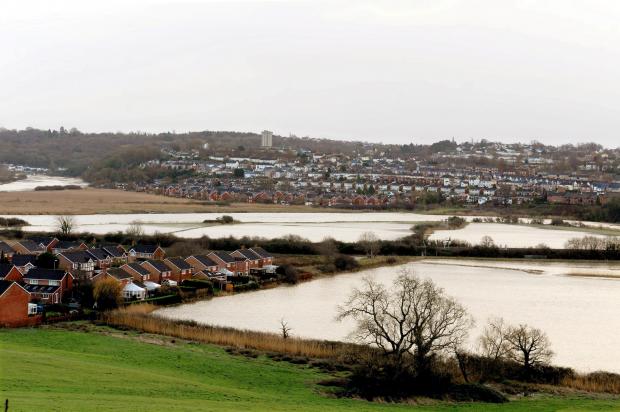
A close call near Caerleon, near Newport in the lower Usk Valley
It’s been a bad winter for floods, with the north of England and southern Scotland getting particularly badly hit, along with parts of Wales, and we are only halfway through. As has been noted previously there can be no blank cheque for flood defences; we need to make rational and cost effective sustainable choices when it comes to coastal defence. We need to decide how we are going to deal with the weather related effects of a warming world with expanding and rising oceans.

Now I am not suggesting for a moment the wholesale abandoning of large tracts of our country to the ravages of the ocean, although unless climate change is taken on then we may end up facing that eventuality. Rather we need to make rational long-term sustainable choices about flood defence and the development of a comprehensive planning system for our country. At a time when several of our councils are considering building on known flood plains the issue of flooding remains important.

We need to actively build in flood prevention / flood avoidance into as the planning application process and make efforts to avoid building in those areas that are vulnerable (or will be vulnerable in the future) to flooding or at least build to take into account the possibilities of flooding. If we are going to build on flood plains or other areas that are vulnerable to flooding then we must use flood resistant or flood hardened modern intelligent design and building techniques to reduce potential future damage, loss and inconvenience as is done elsewhere. 

The UK mainland has around 5,000 miles of coastline, not all of which is inhabited or at prime risk, but even so, going Dutch with wholesale widespread sea defences would be an expensive option for Wales, let alone the UK. Now those coastal roads and railways that are at regular risk of being damaged by a combination of bad weather and high tides may well need to be re-routed.

In Wales we do need to take a longer view and seriously consider the possibilities of relaying railway lines and building roads away from those more vulnerable coastal areas. Additionally we need to harden our power network and our communities to the effect of severe weather events. That said we are in a much better position to make more rational coastal defence choices than some countries in the developing world and to seriously consider just exactly where we put key infrastructure.

The quick fix (and short term gain) may be one of our biggest problems here in Wales along with the lack of sensible detailed all Wales development planning. Across the border, Westminster’s institutionalised short term view led to the cutting of £500 million pounds from the Environment Agency budget (between 2010 and 2013, and at the time (in 2014) anticipated another ‘saving £ 300 million pounds by 2015 and the cutting of some 1,500 jobs.

The Pacific island nations and Bangladesh will face the potentially catastrophic social, economic and political consequences of rising and expanding oceans before we will.  Even the Dutch have after over 500 years of experience trying come to the conclusion that in some cases it is better to build in flood room, setting aside some coastal wetlands and other land as places that will be allowed to flood to take the pressure of other areas. 

Coastal flooding and bad weather may hit some parts of our country hard, other areas may literally dodge the storm, but we may not be so lucky all the time. Westminster budget cuts mean (which are unlikely to be reversed) that in England (in in Wales) there will be less money, less resources and less people to work to prevent future floods. We in Wales cannot afford that short of dull short term thinking... we need to start the process of better flood prevention now 
before the next time.

Saturday, 2 January 2016

IT’S BROKE – TIME TO FIX IT!

Rail fares have risen (1.1%) today; something that will directly impact on regular and occasional rail travellers, at a time when they can least afford it. 

At present rail fare increases are determined with a calculation based on RPI (retail price index) – a system that has attracted repeated criticism from respected economists and rail travellers alike. 

Passengers and commuters should not be hit in the pocket because the Government is intent on clinging onto a broken and outdated system.

For 2016 the rail fare rise was relatively small as a result of low inflation but at some stage inflation will return to normal, and the RPI based rail fare calculator will hit rail passengers hard as they are exposed to the substantial annual increases. 

A much fairer way of calculating fares would be to use the CPI (consumer prices index) that is consistently lower than RPI. The UK Westminster Government already uses CPI to calculate its liabilities such as social security.

Plaid Cymru believes in the public ownership of railways, and the full transfer of powers over railways, including the transfer of full funding for railway infrastructure, to Wales. A Plaid Government would work to devolve Network Rail and set up a not-for-dividend company in which profits are reinvested into better services rather than used to pay dividends. 

Our priority in Wales must be to deliver higher standards and lower journey times for passengers and commuters in all corners of Wales and invest profits to improve services.

Thursday, 9 January 2014

GOING DUTCH?

As has been noted elsewhere there can be no blank cheque for flood defences; we need to make rational and cost effective sustainable choices when it comes to coastal defence. We need to decide how we are going to deal with the weather related effects of a warming world with expanding and rising oceans. Now I am not suggesting for a moment the wholesale abandoning of large tracts of our country to the ravages of the ocean. Rather we need to make rational long term sustainable choices about flood defence and the development of a comprehensive planning system for our country. 

After the flooding...
We need to build in flood prevention / flood avoidance as part of the planning system and make efforts to avoid building in those areas that are vulnerable to flooding or at least build to take into account the possibilities of flooding. If we are going to build on flood plains or other areas that are vulnerable to flooding then we must use flood resistant or at least flood hardened modern intelligent design techniques to limit potential future damage, loss and inconvenience as is done elsewhere. 

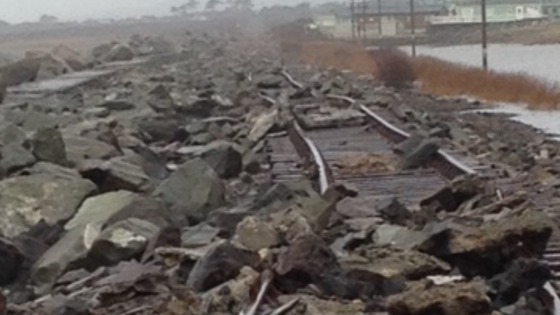
Our country has around 5,000 miles of coastline, not all of which is inhabited or at prime risk, but even so, going Dutch with wholesale widespread sea defences would be an expensive option for Wales, let alone the UK. Now those coastal roads and railways that have been damaged by the recent combination of bad weather and high tides will be repaired in the short term.

We in Wales do need to take a longer view and seriously consider the possibilities of relaying railway lines and building roads away from those more vulnerable coastal areas. Additionally we need to harden our power network and our communities to the effect of severe weather events. That said we are in a much better position to make more rational coastal defence choices than some countries in the developing world and to seriously consider just exactly where we put key infrastructure.

The quick fix (and short term gain) may be one of our biggest problems here in Wales along with the lack of sensible detailed all Wales development planning. Across the border, Westminster’s institutionalised short term view led to the cutting of £500 million pounds from the Environment Agency budget (between 2010 and 2013, and anticipated another ‘saving £ 300 million pounds by 2015 and the cutting of some 1,500 jobs. I suspect that in the wake of the last few weeks the Con Dems may revisit this...


The Pacific island nations and Bangladesh will face the potentially catastrophic social, economic and political consequences of rising and expanding oceans before we will.  Even the Dutch have after over 500 years of experience trying come to the conclusion that in some cases it is better to build in flood room, setting aside some coastal wetlands and other land as places that will be allowed to flood to take the pressure of other areas. 

A close call near Caerleon, near Newport in the lower Usk Valley
Some parts of our country got hit hard by the recent coastal flooding and bad weather, other areas literally dodged the bullet , we may not be so lucky next time. Westminster budget cuts mean (unless they are reversed) that in England there will be less money, less resources and less people to work to prevent future floods. We in Wales cannot afford that short of dull short term thinking... we need to start the process of better flood prevention now before the next time.

Sunday, 13 October 2013

WAITING FOR A TRAIN!

I now regularly sees the sun come up whilst trundling rapidly across the Gwent levels and regularly stand on Cardiff (Central) Station waiting for connections amidst the tantalising smells wafting across from the Brain brewery (at least when there is a South West or West wind). I find that I have become a regular rail user, joining the many thousands of people commuting to (and from work) in the south.

As a regular rail user (Arriva Trains)I find that to be honest, aside from the occasional glitch (over running maintenance from weekends, periodic broken down trains, point’s failures and cable thefts, etc) most of the time the system seems to function. Having lived, worked and commuted in London (for some seven and half years) I find myself commuting by train again. On a good day I can make it from station to station (Treforest to Newport, etc) in around 50 mins (and that with one change) which is not too bad.

A simple choice: People before Profits
Other rail travellers are not so lucky, with rail franchise operators running services that ensure certain connections literally cannot be made, which is one way to avoid getting fined. This is not a satisfactory way to run a rail service, the key word here being ‘Service’. Obviously this state of affairs speaks volumes,especially as it fails to impact on the Westminster elite (I use the term loosely) as they tend not to travel by train very much (save when cultivating votes).

In much of our country trains a once cheap and reasonably reliable form of public transport is conspicuous by its absence, that not to mention costs and infrequent services deter actual and potential rail passengers. When you factor in the legacy of the Conservative and Labour rail service rundown and cuts in the 1960 and early 1970’s and excessive profiteering on the part of the privatised passenger franchise holders and much is explained.

Our country suffered particularly badly from rail cuts in the late 1960’s when Labour was in office under Harold Wilson, that and the pit closure programme that hit hard in the south and north east. The privatisation of British Rail, something that New Labour loudly boasted that they themselves would have done if the Conservatives had not already done it, was one of the latter significant more questionable ideologically driven batch of privatisations (between 1994 and 1997).

For the best part of ten years prior to privatisation British Rail could best perhaps have been described as starved of funds. The passenger arm was initially broken up upon privatisation into 25 seperate passenger franchises. Our country’s rail region Wales and West ended up as Wessex Trains and Wales and Borders which at one point included the Cardiff Railway Company services which operated as Valley Lines. This franchise was then split into two separate franchises, which are currently run by First Great Western and Arriva Trains Wales.

Our current franchise was awarded to Arriva Trains Wales in 2003 and runs for 15 years, and is due to end in 2018. There have been many persistent calls for the rail franchise to be run as a not-for-profit operation – with profits being feed back into the system, rather than vanishing to pay shareholders dividends. The Welsh Government has been considering this option for when the deal ends. Arriva Trains Wales is the only train firm covered by the Welsh Government’s transport remit. Any longer-distance services e.g. Swansea or Cardiff to Paddington are currently operated by First Great Western who have their fares regulated by the Westminster Department for Transport.

Now while this may well be ancient history, but it has implications for the way the railway franchises run how their profits are made and where they go. Despite the best efforts of New Labour and the Con Dems to reduce it, the franchise companies still receive a significant chunk of public (state) funding. Basically this has to be repaid to the Government before any profits can be made on top – hence the regular (and painful) rise in rail fares. It would make more sense for profits made to stay in the system rather than get hovered up to pay shareholders dividends and senior mangers fat bonuses.

The service we currently get reflects the disinterested priorities of the franchise holder rather than our national priorities when it comes to our railways and the services we need. A couple of weeks ago, I used the Arriva trains service from Betws-y-Coed to Llandudno junction (my actual destination was Conwy) but connecting trains (that stop) could best be described as infrequent. The friendly advice was to walk across the bridge to the town rather than wait a few hours for the connecting service (as Conwy appears to be an infrequent request stop).

For those people who don’t know about it, the Conwy Valley line is one of our country’s most beautiful rail journeys (at least in my opinion) it runs from Llandudno (via Llandudno Junction) to Blaenau Festiniog is single track and served by a series of unstaffed  stations (some of which are request stops). If I am being honest the service provided could best be described as minimal and inconvenient for potential passengers, possibly far less of service runs on the line than at any time since the railway was built with a train every three hours on weekdays and Saturdays, with six departures per day each way in total.

The electrification of the local lines into Cardiff, Bridgend, Newport and Swansea is long overdue as is the tram system to link the Bay properly with the rest of Cardiff. The Transport (Wales) Act which came into effect in February 2006 gave the National Assembly the powers to plan and co-ordinate an integrated transport system, how much longer do we have to wait to see some vision? In the meantime the rail companies have been busy ramping up rail fares, attempting to reduce rail services, all with the tacit co-operation of the Westminster Labour Government and the Department for transport (in London).

Such duplicity has never been acceptable - it’s time for our government in Cardiff to take the long term view, to bite the bullet and actually put its money where its mouth is and work to redevelop our rail services, boost the development of rail freight and to co-ordinate rail and bus services across the whole of Wales. To do this effectively Wales needs to have full control of its transport policy and transport budget devolved as quickly as possible and the franchise when it is renewed in 2017 needs to be run on a not for dividend profit basis. That day cannot come soon enough!

Thursday, 15 August 2013

THE RIGHT CHOICE?

The sensible choice would be for the Welsh Government to follow Scottish example of freezing off-peak prices, as RPI inflation figures (3.1% in the year to July) threaten another 4.1% increase from January 2014 across Wales. It is worth noting that Trade union leaders and transport experts have called on the Government to follow Scotland’s lead and freeze or limit rises in train fares for passengers.  The Welsh Government’s default position is that fares should only rise by 1% above the July inflation figure. The problem is that while the Labour in Wales administration could choose to freeze or limit the fares increase (this deal has been made every year since 2001 for the Wales and the Borders franchise) this is not set in stone.

A choice: Not for profit or Profit before people?
The Western Mail’s sources revealed yesterday that although Scotland is freezing the cost of off-peak journeys. There is a distinct possibility that hard-pressed Welsh commuters may well end up having to face another 4.1% increase in January 2014, this would be on top of the 4% rise at the start of this year (2013).  In Scotland, the cost peak-rail travel will rise with inflation at 3.1% and the freeze in off-peak travel will cover about 40% of rail journeys. A 4.1% increase in rail fares would increase the cost of an annual commuter route season ticket between Pontypridd and Cardiff from £880 to £916 and between Aberdare and Cardiff from £1,040 to around £1,082.

The current franchise was awarded to Arriva Trains Wales in 2003 and runs for 15 years, and is due to end in 2018. There have been many persistent calls for the rail franchise to be run as a not-for-profit operation – with profits being feed back into the system, rather than vanishing to pay shareholders dividends. The Welsh Government has been considering this option for when the deal ends. Arriva Trains Wales is the only train firm covered by the Welsh Government’s transport remit. Any longer-distance services e.g. Swansea or Cardiff to Paddington, are currently operated by First Great Western, who have their fares regulated by the UK Government Department for Transport. They have stated that rail fares on the routes it controls would increase by an average of 4.1% from January 2013.

To make matters worse the announced rise in rail fares will come take place against a backdrop of squeezed incomes, with average earnings increasing by just 1% and many experiencing pay freezes. There have been calls for the ending the annual inflation-plus fares rise, with them being replaced by a new formula, RPI minus 1% from 2015.  The rail fare rises which will arrive in January’s rise will be the sixth time in seven years that rail fares have outstripped wages. It has been calculated that between 2008 and next January rail fares will have risen some 40%, compared with a 15% increase in average earnings.

It should also be noted that the cost of some season tickets may rise by 9% as some routes are not subject to regulation under franchise agreements. All these rail fare increases will take place against projections of a 2.4% increase in average earnings next year. The TUC has suggested that since the railways were privatised, they have cost taxpayers about £1.2 billion pounds a year and this with what has been described as “minimal” investment in trains and stations.  

The Department for Transport continues to insist that the UK Westminster Government is investing record amounts in the railways to help deliver economic growth and boost passenger capacity. Additionally the Association of Train Operating Companies has also insisted that only a small proportion of income goes on profits, with most going on staff costs and investment. They also say that railway companies only make modest profits with 3p from every pound earned going towards profit, 17p goes towards staff costs, and 48p goes towards maintaining and improving infrastructure (including track and signalling).

At the end of the day, this is good news for rail operators and shareholders but bad news for hard-pressed long suffering rail commuters who are having to hand over even more of their pay packets for poor-quality services. We are where we are because regulated fares, including peak-time journeys, have been set at RPI inflation plus 1% since 2004 because successive Governments (both Labour and Con Dem) have been trying to shift the burden of paying for the railways from taxpayers to rail passengers.


It is Somewhat ironic that the persistent attempts of successive Westminster governments to wash their collective hands of their responsibilities for rail transport infrastructure come at a time when annual passenger journey numbers have increased from 750 million to 1.5 billion. The day that the rail franchise in our country is run on a not for profit basis, with profits being reinvested into the business, cannot come soon enough.