Showing posts with label planning regulations. Show all posts

Friday, 29 January 2016

REDEFINING DULL

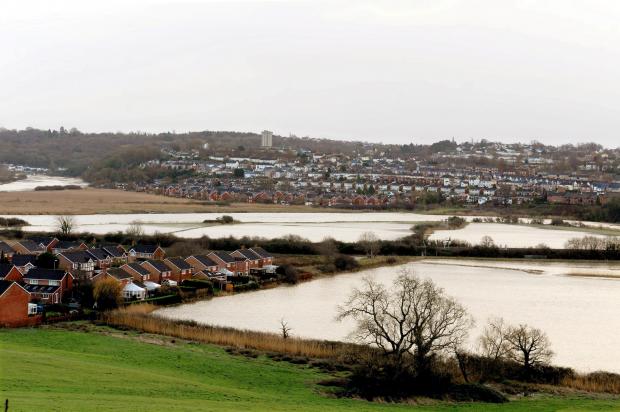
A close call near Caerleon, near Newport in the lower Usk Valley
It’s been a bad winter for floods, with the north of England and southern Scotland getting particularly badly hit, along with parts of Wales, and we are only halfway through. As has been noted previously there can be no blank cheque for flood defences; we need to make rational and cost effective sustainable choices when it comes to coastal defence. We need to decide how we are going to deal with the weather related effects of a warming world with expanding and rising oceans.

Now I am not suggesting for a moment the wholesale abandoning of large tracts of our country to the ravages of the ocean, although unless climate change is taken on then we may end up facing that eventuality. Rather we need to make rational long-term sustainable choices about flood defence and the development of a comprehensive planning system for our country. At a time when several of our councils are considering building on known flood plains the issue of flooding remains important.

We need to actively build in flood prevention / flood avoidance into as the planning application process and make efforts to avoid building in those areas that are vulnerable (or will be vulnerable in the future) to flooding or at least build to take into account the possibilities of flooding. If we are going to build on flood plains or other areas that are vulnerable to flooding then we must use flood resistant or flood hardened modern intelligent design and building techniques to reduce potential future damage, loss and inconvenience as is done elsewhere. 

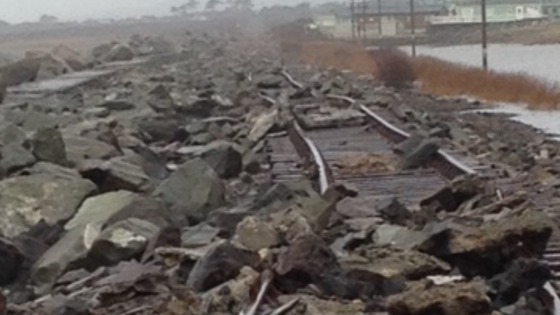
The UK mainland has around 5,000 miles of coastline, not all of which is inhabited or at prime risk, but even so, going Dutch with wholesale widespread sea defences would be an expensive option for Wales, let alone the UK. Now those coastal roads and railways that are at regular risk of being damaged by a combination of bad weather and high tides may well need to be re-routed.

In Wales we do need to take a longer view and seriously consider the possibilities of relaying railway lines and building roads away from those more vulnerable coastal areas. Additionally we need to harden our power network and our communities to the effect of severe weather events. That said we are in a much better position to make more rational coastal defence choices than some countries in the developing world and to seriously consider just exactly where we put key infrastructure.

The quick fix (and short term gain) may be one of our biggest problems here in Wales along with the lack of sensible detailed all Wales development planning. Across the border, Westminster’s institutionalised short term view led to the cutting of £500 million pounds from the Environment Agency budget (between 2010 and 2013, and at the time (in 2014) anticipated another ‘saving £ 300 million pounds by 2015 and the cutting of some 1,500 jobs.

The Pacific island nations and Bangladesh will face the potentially catastrophic social, economic and political consequences of rising and expanding oceans before we will.  Even the Dutch have after over 500 years of experience trying come to the conclusion that in some cases it is better to build in flood room, setting aside some coastal wetlands and other land as places that will be allowed to flood to take the pressure of other areas. 

Coastal flooding and bad weather may hit some parts of our country hard, other areas may literally dodge the storm, but we may not be so lucky all the time. Westminster budget cuts mean (which are unlikely to be reversed) that in England (in in Wales) there will be less money, less resources and less people to work to prevent future floods. We in Wales cannot afford that short of dull short term thinking... we need to start the process of better flood prevention now 
before the next time.

Thursday, 9 January 2014

GOING DUTCH?

As has been noted elsewhere there can be no blank cheque for flood defences; we need to make rational and cost effective sustainable choices when it comes to coastal defence. We need to decide how we are going to deal with the weather related effects of a warming world with expanding and rising oceans. Now I am not suggesting for a moment the wholesale abandoning of large tracts of our country to the ravages of the ocean. Rather we need to make rational long term sustainable choices about flood defence and the development of a comprehensive planning system for our country. 

After the flooding...
We need to build in flood prevention / flood avoidance as part of the planning system and make efforts to avoid building in those areas that are vulnerable to flooding or at least build to take into account the possibilities of flooding. If we are going to build on flood plains or other areas that are vulnerable to flooding then we must use flood resistant or at least flood hardened modern intelligent design techniques to limit potential future damage, loss and inconvenience as is done elsewhere. 

Our country has around 5,000 miles of coastline, not all of which is inhabited or at prime risk, but even so, going Dutch with wholesale widespread sea defences would be an expensive option for Wales, let alone the UK. Now those coastal roads and railways that have been damaged by the recent combination of bad weather and high tides will be repaired in the short term.

We in Wales do need to take a longer view and seriously consider the possibilities of relaying railway lines and building roads away from those more vulnerable coastal areas. Additionally we need to harden our power network and our communities to the effect of severe weather events. That said we are in a much better position to make more rational coastal defence choices than some countries in the developing world and to seriously consider just exactly where we put key infrastructure.

The quick fix (and short term gain) may be one of our biggest problems here in Wales along with the lack of sensible detailed all Wales development planning. Across the border, Westminster’s institutionalised short term view led to the cutting of £500 million pounds from the Environment Agency budget (between 2010 and 2013, and anticipated another ‘saving £ 300 million pounds by 2015 and the cutting of some 1,500 jobs. I suspect that in the wake of the last few weeks the Con Dems may revisit this...


The Pacific island nations and Bangladesh will face the potentially catastrophic social, economic and political consequences of rising and expanding oceans before we will.  Even the Dutch have after over 500 years of experience trying come to the conclusion that in some cases it is better to build in flood room, setting aside some coastal wetlands and other land as places that will be allowed to flood to take the pressure of other areas. 

A close call near Caerleon, near Newport in the lower Usk Valley
Some parts of our country got hit hard by the recent coastal flooding and bad weather, other areas literally dodged the bullet , we may not be so lucky next time. Westminster budget cuts mean (unless they are reversed) that in England there will be less money, less resources and less people to work to prevent future floods. We in Wales cannot afford that short of dull short term thinking... we need to start the process of better flood prevention now before the next time.

Monday, 19 November 2012

A FIGHTING CHANCE?


Take a wander around most of our town centres and the out of town retail parks and with your own eyes you will see that impact of the ongoing recession in the rising number of empty shops. With this in mind the recent study produced by the British Retail Consortium which has revealed that the town centre vacancy rate (high streets and shopping centres) in the UK was 11.3% in October 2012 will come as no surprise. This grim statistic is this highest figure that the BRC has recorded since they began the Monitor in July 2011. The highest shop vacancy rates were recorded in Northern Ireland (20.0%), Wales (15.1%) and the North & Yorkshire (14.6%). The BCS has noted that these are the worst vacancy rate since the survey began in July 2011 and tend to confirm that financial challenges for both customers and business retailers are far from over yet.

It not just the local shops that are feeling the pinch, in my home town (where this has been going on for a while) and in more than a few other places even the old high street big names are bugging out, not necessarily because they are necessarily making a loss more that they trying to maximise their profits in the teeth of the recession and the growth of on-line business. Creating the conditions for a stable future for our town centres and high streets will not be easy, but we have to do something and relatively quickly. Obliterating or at least driving a coach and horses though the planning regulations will not provide a sustainable solution, ending business rates and replacing them with a local income tax might go some way towards giving local businesses a fighting chance of keeping their heads above water until the recession begins to end.

Wednesday, 24 October 2012

AFFORDABLE HOUSING?

At a meeting last night, in Torfaen, the ruling Labour group (naturally bereft of any fresh ideas), voted to include the land between Sebastopol and Cwmbran in the new Torfaen Unitary Development Plan (UDP). The area has now been earmarked for Housing development, in the new Local Development Plan (LDP), the new UDP itself will run until 2021.

Back in February 2012, Torfaen councillors removed the land from the Local Deposit Plan and reduced the number of proposed new houses in Torfaen to 600. A National Assembly planning inspector objected and the site has now been reinstated to the LDP and earmarked for housing. One big unanswered question related to house building in Wales is who exactly are they being built for?


Across the south east, particularly along the coastal belt around Newport and in and around Torfaen, over the last twenty years has seen a spectacular growth in the amount of housing, a significant percentage of which has never been aimed at fulfilling local housing needs. The infrastructure along the coastal belt between Chepstow, Caldicot, Rogiet and Magor is struggling to cope with existing developments and this is well before the projected expansion of housing on and around the former Llanwern site.

The north of Newport has now effectively been linked to the south Cwmbran - something that has brought little material benefit to either urban area. Similarly lining Cwmbran with Sebastopol will bring little benefit to local residents. Even if eventually housing is built on the land just exactly how much of it will be affordable to local residents?

We need to take the long view and to create Welsh Green belt land with the legal and planning protections then, we might go some way to calming things down when it comes to development planning. This would also enable us to introduce a longer term element into the process by which our elected officials (and council officers) plan and view development and redevelopment within and around our urban and not so urban communities.

This is something that could be accomplished by creating Welsh Green belt land, as part of the process we also need an urgent and open debate into the planning process in Wales - something that has been long overdue. It is worth noting that Wales only has one notional green belt, and that lies between Cardiff and Newport, Scotland has seven and Northern Ireland has 30 - each of which has its own policy guidance. It is important to note that once the Green belt or Green wedge is gone it is gone for good.

The Westminster government (in England) aims to get planning officers "off people's backs" with a relaxation of current rules. In true Spiv fashion ‘for a limited period, people will be able to build larger extensions on houses (up to eight metres for detached homes and six for others). Shops and offices will also be able grow to the edges of their premises as Plan A (harsh Public Sector Cuts) fails and a note of desperation creeps in Westminster ministers seek to boost the economy.

These sounds good; it seems reasonable, save for the fact that somewhere amongst the smoke and mirrors the plan to reduce developer’s obligations to build proportional amounts of affordable housing. Not that long ago, a matter of a few months, the Westminster government rewrote the entire planning framework (for England) despite some fierce resistance from countryside campaigners. Now Westminster ministers want further changes to planning rules (in England) in an attempt to boost house-building and revive the economy.

Not wanting to be left out, the Labour in Wales Government in Cardiff is also considering major changes to planning rules in Wales aiming to ‘tilt the balance in favour of economic growth over the environment and social factors’. This decision may be aimed quite specifically at overturning those few occasions of late when our Local Authorities have rejected some developments (often at the behest of local residents) rather than putting economic needs ahead of economic and environmental benefits.

South Sebastopol
This is bad news for those residents of Torfaen, who have been fighting the plan and the good citizens of Abergavenny who have been fighting to retain the livestock market. Not to mention the concerned residents of Carmarthen who are worried about the impact of over large housing developments or the concerned residents of Holyhead who are opposed to new marina development. In Wales we have over the years been ill-served by the planning system, by our local authorities and by our own Government in Cardiff...

Wednesday, 26 September 2012

TAKING THE LONG VIEW?

When it comes to economic development (sustainable or otherwise) I am no longer sure that the Westminster system of Government is capable of taking, let alone sticking to any long term decisions, they take. I have my doubts about the current development model being considered by the Labour in Wales Government (‘pushed’ is far too dynamic a word to be associated with this inert government) in Cardiff Bay. Despite the rhetoric and the speech making I suspect that we have reached that point where there are no new ideas, merely recycled old ones.

With the government in Cardiff bay effectively passing itself off as the old Welsh Office in drag, I would not be surprised if we see a new ‘Welsh Development Agency’ launched in the relatively near future. Following old flawed models of economic development planning for Wales (‘one egg, one basket’) just won’t wash anymore, and neither will simply waiting for a Labour victory in Westminster which might (from a Labour in Wales perspective) start the largesse flowing down the M4 again.

When it comes to economic development and regeneration providing the best conditions to enable our communities to grow and flourish, a sound planning policy is a key component. We should favour local small to medium sized enterprises and need to have much better thought out and far more consistent planning policies for in, out and edge of town retail developments, before our communities are damaged beyond repair.

One, but, not the only, potentially key area for economic activity is that of our town centres. Over the years regeneration scheme has followed regeneration scheme yet with a few exceptions we have failed to find a way of creating the right conditions for sustainable prosperity in most but not all of our towns. Regeneration has become one of those words that has no real meaning anymore. It is often perceived (and sometimes it is) as being driven from the top down i.e. by elected bodies as a process that merely consults after the plans have been drawn up rather than before, during and after - any process run this way runs the risk of becoming deeply flawed.

Our communities, towns and cities have over the years has been the recipient of much grant aid, development and redevelopment schemes and initiatives - how can we measure success? This is something that should be a key factor in the regeneration process. This is the question that needs to be asked - after the cement and the paint has dried, after the regeneration professionals have moved on (having vacuumed up significant funds to distant bank accounts) have the various schemes made a difference?

I suspect that ‘regeneration’ is now an industry in itself and a pretty well paid one at that. Beyond any immediate physical improvements to the locality and the local environment, do many of the regeneration schemes make a real difference when it comes to wealth generation in the area affected by the regeneration scheme? If the end result is in reality a makeover, and the targeted community is no better off, save for being bereft of the 'regeneration funds' that have been effectively siphoned off by professional regeneration companies - is this success?

We need to think beyond the tick box list of the regeneration schemes managers? One key component that is often ignored or marginalised is the community’s greatest resource – is ironically its people. So rather than regeneration and redevelopment professionals moving in and engaging in a token consultation process they should directly talk to local people and find out what they would like to be done, what they actually want for their community and their town.

Regeneration schemes and projects should be bottom up rather than the top down. The bottom line should be when spending public money, work it extra hard and squeeze out every single possible benefit and maximise the impact locally of the regeneration process and build local benefits into the tendering process - whether by employing local people, using local resources, local skills and local input.

If you are reusing or renovating old buildings then any regeneration scheme needs to ensure that old buildings can make a living after the regeneration scheme is finished. If we do this rather than merely making a token gesture towards public consultation then any regeneration schemes will, with hard work really begin to deliver tangible benefits to our communities. As had been said elsewhere, regeneration should be a process rather than an event.

Over the last thirty years, we have all seen the commercial hearts of many of our communities have been seriously damaged as a result of a combination of aggressive policies pursued by the larger retail chains and exceptionally poor decision making on the part of local government and central government indifference. The result of the abject failure or indifference of local and central government when it comes to developing realistic local economic plans leads to a failure to create a level playing field for local businesses and suppliers. This when combined with some very questionable planning decisions over the last thirty years, has directly lead to many of our town centre's being "regenerated" to death.

The rise in the number of shops owned by larger retail chains damages the local economy, drains profit out of the area to remote corporate headquarters and reduces local job opportunities. Ten pound spent in a local business circulates in the local economy three times longer than if it is spent in a non local business. A real side effect of this is a real loss of a sense of community, a loss of local character as our high streets has lead to our high streets losing lost their distinctive local shops which have been replaced by “micro-format” supermarket or chain store branches and any real loss of choice for the customers.

Now the National Assembly Government is now looking to simplify the planningprocess to held railroad through large developments potentially overturning logical planning decisions and local opposition. Yes, the planning system needs overhauling, but, not at the expense of fundamentally damaging democratic control of the planning process – already weakened by years of National Assembly / Welsh Office indifference to local needs. Any plans to speed up the planning process should not at the cost of creating unsustainable developments that further damage the regional economy, our high streets and our communities.

Oddly enough, poor regulation, stupidity and greed and a desire by Government’s (of all political hues) to look the other way as long as things appeared (on the surface at least) to be working all contributed to drop us all in it economically. Now here in Wales, our local authorities, certainly not the best guardian of the public interest and our environment have been bluntly told, by the Welsh Government, that they should recognise that ‘there will be occasions when the economic benefits will outweigh social and environmental considerations’. 

It is one thing to have ‘a Government of Spivs, by Spivs and for Spivs’ in Westminster, quite another to have a government of the inert and the inept in Cardiff Bay allegedly standing up for Wales.  Sadly neither government appear to have any real interest in sorting out our economic problems.  The rules and regulations are now blamed for the lack of economic growth rather than it being a combination of the banking crash, the bankers recklessness and years of stupidly allowing the so called ‘free market’ to drive economic policy and economic planning. 

Thursday, 6 September 2012

A GOVERNANCE OF SPIVS...

The Westminster government is promising (in England) to get planning officers "off people's backs" with a relaxation of current rules. In true Spiv fashion ‘ for a limited period, people will be allowed to build larger extensions on houses (up to eight metres for detached homes and six for others). Shops and offices will also be able grow to the edges of their premises as Plan A (harsh Public Sector Cuts) fails and a note of desperation creeps in Westminster ministers seek to boost the economy.

On the surface it sounds good; it seems reasonable, save for the fact that somewhere amidst the smoke and mirrors is a plan to reduce developer’s obligations to build proportional amounts of affordable housing. Not that long ago, a matter of a few months, the Westminster government rewrote the entire planning framework (for England) despite some fierce resistance from countryside campaigners. Now Westminster ministers want further changes to planning rules (in England) in an attempt to boost house-building and revive the economy.

Meanwhile this side of the bridge a major change in planning rules in Wales aims to ‘tilt the balance in favour of economic growth over the environment and social factors’. This decision may be aimed quite specifically at overturning those few occasions when our Local Authorities have rejected some developments (often at the behest of local residents) rather than putting economic needs ahead of economic and environmental benefits.

The Labour in Wales run Welsh government will formally announce this controversial move sometime next month. The problem lies not with the planning system, which is far too weak, and has proved itself to be more than capable of blatantly ignoring expressed local concerns, with few real consequences for the decision makers. Any meaningful supervision of the planning process by the Welsh Assembly Government has proved to be pretty minimal.

Quietly in Westminster we are moving towards having ‘a Government of Spivs, by Spivs and for Spivs’. The rules and regulations are blamed for the lack of economic growth rather than it being a direct consequence of the banking crash, the bankers recklessness and years of allowing the so called ‘free market’ to drive economic policy and economic planning. Oddly enough, overregulation and red tape did not cause the financial crash – the banks did.

Poor regulation, stupidity and greed and a desire by Government’s (of all political hues) to look the other way as long as things appeared (on the surface at least) to be working all contributed. Now here in Wales, our local authorities, certainly not the best guardian of the public interest and our environment have been bluntly told, by the Welsh Government, that they should recognise that ‘there will be occasions when the economic benefits will outweigh social and environmental considerations’.

Tell that to the residents of Torfaen, who have been fighting the plan and the good citizens of Abergavenny who have been fighting to retain the livestock market in the town. Or perhaps the concerned residents of Carmarthen who are worried about the impact of over large housing developments or the concerned residents of Holyhead who are opposed to new marina development. All these people (and all of us) have been ill-served by the planning system, by our local authorities and our own Government in Cardiff – why should we expect the Westminster Government to be any different...