Showing posts with label Journalism. Show all posts

Friday, 31 October 2014

THE FREEDOM OF THE PRESS

The Inter American Press Association (IAPA) has just finished it’s 70th General Assembly, which was held in Santiago, in Chile, it’s conclusions don’t make for good reading. The IAPA noted that freedoms of the press and of freedom of expression in the Americas have seen a "marked deterioration" in the past six months.
It was noted that there had been a "significant increase in direct and indirect censorship and physical attacks on journalists". Violence directed against journalists is being carried out by organized crime, drug traffic hit men and police-style groups on the orders of several governments of the region which resulted in the murder of 11 journalists – three in Honduras, three in Paraguay, two in Mexico, one in El Salvador, one in Colombia and one in Peru.

The Miami-based group stated that media workers in almost all the countries of the region had been affected, but Venezuela was particularly singled out for criticism. The IAPA said Venezuelan police forces and police-style groups on the orders of the government had been left several journalists injured. Physical attacks on journalists were also recorded during coverage of various election processes in Bolivia, Brazil and Peru, and street protests in the American city of Ferguson and in Sao Paulo and Rio de Janeiro, Brazil.
The IAPA also reported that over the past six months:
In Cuba, the "massive detention of dissidents for the simple act of expressing their political opinions" continued; In Cuba four journalists remain behind bars with sentences of up to seven and 14 years imprisonment, while there continues the massive detention of dissidents for the simple act of expressing their political opinions.

Also in Cuba there has to be mentioned that the online newspaper “14yMedio”, launched in May by journalist Yoani Sánchez, is intermittently being blocked on its Web site. In Venezuela official sectors and criminal gangs used Facebook and Twitter to attack media and journalists. In Argentina, social networks and government-owned media were also used with these purposes.

Censorship of the media during electoral processes was evident in Brazil, where the judicial branch of government accepted 138 requests that media withdraw content, and in Bolivia where the opposition saw political propaganda limited to 30 days before the elections, while President Evo Morales suffer few if any limitations. In Venezuela the government of President Nicolás Maduro continues to deny foreign exchange for the purchase of supplies for print media. More than 30 newspapers are hit by the lack of newsprint and another 12 have already ceased publishing.

In the US, the government was "continuing to prohibit officials from talking to the press". In the USA and Canada legislative reforms aimed at limiting exceptions on the part of these governments to continue restricting public information for reasons always attributed to national security were defeated.

In Bolivia, President Evo Morales "did not suffer any limitations" to political propaganda before this month's elections, unlike the opposition; In Haiti, Chile and Colombia several laws have regulations by which the government and agencies of control can meddle in editorial content and criteria. The same is happening in Argentina with the discriminatory application of the Audiovisual Services Law against the Clarín group, and in Bolivia where the government is threatening enactment of a communication law. In Costa Rica under consideration is a bill to create serious restrictions on media content and editorial criteria.

In Argentina, Nicaragua and Venezuela official corruption has been reflected in the abuse of government propaganda and in the discriminatory distribution of official advertising. The lack of transparency and access to public information continues to be an obstacle to the free practice of journalism in Argentina, Bolivia, Ecuador, El Salvador, Guatemala, Haiti, Honduras, Mexico, Nicaragua, Peru and Dominican Republic. 

The ISPA has warned that in Argentina, Haiti, Chile and Colombia the government could use existing laws to "meddle in editorial content and criteria". It also stated that the lack of transparency and access to public information continued to be an obstacle to the free practice of journalism in several countries, including Mexico, Ecuador, Argentina and Peru.

Tuesday, 16 July 2013

WHO WILL BE NEXT?

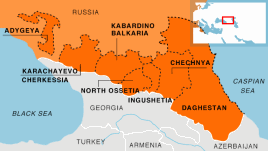
Akhmednabi Akhmednabiyev, deputy editor and political commentator for the independent Russian-language weekly "Novoye delo" and a regular contributor to the website Kavkaz-Uzel, was shot dead early on July 9 close to his home on the outskirts of Makhachkala. He was at least  the 13th journalist to be gunned down in Daghestan since 1992; none of the earlier killings, including that of Gadzhimurad Kamalov, editor of the weekly "Chernovik," in December 2011 has been solved.

Both law enforcement agencies and other media professionals assume that Akhmednabiyev was killed because of his professional activities. He wrote extensively about human rights violations, including abductions and torture by the police of suspected Islamic militants, but also about local Daghestani politics, such as the situation in the western Akhvakh district where he practiced as a doctor in his native village of Karata.

One of Akhmednabiyev’s last articles highlighted protests in Akhvakh in April-May that demanded the resignation of district administrator Ismail Magomedsharipov. Other recent articles discussed the detention by police in late April in Kizlyar of a wedding cortege that displayed Islamic banners, and a recent initiative to unite Daghestan's construction workers in an independent union. 

"Novoye delo" editor in chief Gadzhimurad Sagitov described Akhmednabiyev's writing as "honest and frank," noting at the same time that he never stooped to ad hominem attacks.

Akhmednabiyev was one of eight journalists named in a "death list"circulated in Makhachkala in late summer 2009 who had been earmarked for retribution for their imputed connivance in the killing of police and security personnel by members of the Islamic insurgency. The death list, which contained some 250 names, was drawn up by relatives of the slain police officers.


Akhmednabiyev had narrowly escaped death six months ago when unknown perpetrators opened fire on him from precisely the same spot where he was finally killed.  The prosecutor’s office opened an investigation into the willful destruction of property and the illegal possession of firearms, but not into attempted murder.

After Akhmednabiyev's lawyer Abdurashid Sheykhov appealed that refusal in a local court, Daghestan’s  Supreme Court ruled in April that the prosecutor's office should open an attempted-murder investigation, but it failed to do so for reasons that remain unclear.

Daghestani Prosecutor-General Andrei Nazarov has since been transferred to Bashkortostan. Similarly unclear is why law enforcement agencies failed to try and trace the sender of threatening SMS messages Akhmednabiyev had received in recent months.

In light of the focus of Akhmednabiyev’s reporting, and the inclusion of his name on the 2009 death list, suspicion inevitably falls on law enforcement agencies. Acting Republic of Daghestan President Ramazan Abdulatipov  was quoted as attributing the murder to "those for whom neither moral nor human norms exist," presumably meaning the North Caucasus insurgency, even though its members had no obvious reason to target Akhmednabiyev.

A further possibility is that Akhmednabiyev was killed by one or another political interest groups out to undermine and discredit Abdulatipov in the run-up to the election by the republic’s parliament of a successor to Magomedsalam Magomedov, whom Russian President Vladimir Putin dismissed as republic of Daghestan president in late January.

Several of the 170+ journalists who bore Akhmednabiyev’s body in procession through Makhachkala on the day he died carried placards with the rhetorical question "Who will be next?" 

Kavkaz-Uzel has offered a reward of 200,000 rubles ($6,077) for information on the identity of Akhmednabiyev’s killers.

Friday, 2 November 2012

TAX EVASION: LEARNING FROM GREECE

Costas Vaxevanis, a Greek journalist has been acquitted of breaching privacy for publishing the names of 2,000 suspected tax evaders. He published a list of Greeks with Swiss bank accounts, including a government minister and other prominent figures in public life, in Hot Doc, the weekly magazine that he edits. In court, his lawyers argued that the charges were outrageous and said no-one on the list had actually complained of a breach of privacy. After a trial lasting one day, an Athens court found Mr Vaxevanis innocent.

Costas Vaxevanis
The court ruling comes at a time when Greece is being urged by international lenders to crack down on tax evasion as part of far-reaching reforms demanded in exchange for billions of euros of bailout money. The list of suspected evaders was reportedly leaked by an HSBC employee and passed to IMF chief Christine Lagarde when she was French finance minister in 2010. She apparently handed the list to the Greek authorities, but they sat on it, taking no action.

At least two of Greece's former finance ministers have admitted seeing copies of the list. The current Greek finance minister, Yannis Stournaras, (in office from in June), has told parliament he has not seen the list. The heavy handed prosecution has left lots of egg on the faces of current Greek Government. The Athens court took little time to acquit the journalist, and observers (according to the AFP news agency) in the courtroom broke out in applause. Greece may have given us democracy, but, perhaps there are some other things we can learn from them when it comes to exposing tax evaders.