Showing posts with label Scotland. Show all posts

Sunday, 26 June 2016

THE INVASION OF DOUBT

That's democracy, the people have spoken, the result should respected, you win some, you lose some - that's the way it works. Personally I thought that  it was lacklustre campaign from both sides, with a few honourable exceptions. There was a lot of emphasis on people's fears and much stoking of them by both sides. 

What must not happen is a demonisation of voting classes by the chattering classes who did not get the result they want. Democracy often means that someone else wins, it's not their fault, it's not because they made a bad choice, it's not because the electors are stupid (they are far from that) - that's the way democracy works. The one overwhelming thing that should be learned from the referendum is that the voters disillusioned or otherwise should never be taken for granted. 

There will now obviously be a period of blame, some soul searching and then probably a longer period of economic consequences for all of us. I am pleased that much of my former constituency (Monmouthshire) voted Remain, but am disappointed (but not entirely surprised) with the other Leave results in Wales.

There will be much speculation and column inches (electronic and otherwise) over the next few days, weeks and months about the result. The other 'I' word (immigration) was a key factor, but, I genuinely believe not the key factor in the result. The failure of the political elite to discuss this issue in a responsible way created a political vacuum into which UKIP (and others of their ilk) were able to step into and make the issue their own. 

This was clearly a massive mistake as a vacuum in both nature and politics is soon filled. There was the failure to argue a positive case on Europe (with some honourable exceptions, Plaid, the SNP, the Greens and some others) was another massive mistake with the Westminster focused political parties relying on a revamped 'Project Fear’. 

As a former parliamentary, national assembly and local government candidate the grow disconnect between the ordinary voters and their elected (and wannabe elected) representative has been (and is) increasingly palpable. I think that for the best part of fifteen years, a growing number of increasingly abandoned and disillusioned, but not necessarily all older (although many were) voters who had major reservations about Europe (and the European project) have been offered little by a whole raft of politicians from a whole raft of political parties who increasingly did not reflect their views on identity, the EU and immigration.

I think some of what happened revolves around the concept of bring 'British' and Europe's perceived threat to 'Britishness'. It does not matter that there was not and never has been a threat to it. In England to be 'British' and 'English' is the same thing. In Scotland and in Wales that is not the case, being 'Welsh' and 'British' does not necessarily mean exactly the same thing. I believe that a significant percentage of the leave voters in Wales are quite content to be both 'British' and 'Welsh’. 

I am very much reminded of something Gwyn Alf Williams wrote in his book When Was Wales? about the Welsh people being the first of the British and probably the last of them too [ “This history of the Welsh may close then with the intriguing thought that the Welsh, First of the British, look like being the Last.”].  As far the Europe of the possible and Wales’s place in it, we may politically be back to a near 1979 moment, save this time we have (or almost have) a Welsh Parliament (as flawed as it may be) to act as a shield and to give us a voice within the UK. 

In Wales some voters chose to buy into the Leave campaigns message which via a fractious and often vicious campaign that was tainted with more than a measure of racism and palpable deceit (the old adage about a simple repeated lie worked a treat). There was demographic split in the vote based on age - whether or not the referendum was used to give the elite a poke in the eye and to give vent to frustrations that have long built up is now largely irrelevant - we are where we are and there is no going back. 

Analysis of the vote may not be easy, the focus on immigration may well mask a far deeper disillusion. Some of the Leave vote may be about a rejection of the more socially destructive side effects of globalisation and despite the highly visible infrastructure investment people feel that little has been done for them or their communities. 

Some of the communities that voted 'Leave' have suffered from the impact of years of generationally destructive economic policies. Other communities that have a similar history of economic neglect and have also suffered from the effects of years of destructive economic policies voted 'Remain'. Ironically almost all of these communities that chose 'Leave' were also significant recipients of EU regional development aid.

Some things cannot be ignored - it is very likely that Wales will suffer significantly when the EU funding get runs out. Westminster will never invest in Wales to the same degree as the EU did. If Westminster had looked after Welsh economic and social interests then Wales would never have been eligible for EU regional aid in the first place and it would never have been needed. 

Wales at Westminster has become electorally and politically irrelevant in recent years. Our country will become even more irrelevant at Westminster when the number of Welsh MP's drops from 40 to 29 when the new parliamentary boundaries are implemented before the next Westminster general election. 

The UK is now effectively on its way out of the EU - Wales in its current state of political existence, will have within a few years no relationship with the EU save for a trading, geographical, cultural and sporting one. Within the national movement in Wales we need to work out what comes next, certainly our soon to be parliament will gain more powers (just exactly how Boris views the Wales Bill is an unknown) and a degree of control over taxation and energy - but what will future Welsh governments do with them? 

As for our national project, Europe is pretty much off the radar, if not gone for the foreseeable future. This means that we need to map a new path to achieving our national objectives and our national ambitions for this nation, rather than redefining them and to take the people with us, or we are going no where. 

Wednesday, 3 February 2016

HERE WE GO AGAIN


On the 6th February the 6 Nations rugby internationals kick off, rugby fans will prepare themselves for over crowded trains and the usual excuses from the rail franchise holders. On Friday 28thFebruary Wales play France. Rugby fans will face the ordeal of a Friday night international match, with an 8pm kick-off and the logistical perfect storm that awaits them. 

Simply getting to (and from) Cardiff on a Friday evening, with the lack of late trains, and scheduled maintenance – may more than try fans patience. It will be grim for Welsh Rugby fans, travelling south and east to Cardiff before kick-off, but it may be even grimmer afterwards when they try to get home. 

Bitter experience relayed by supporters (and would be rail travellers) tells me that the franchise holders will run short trains, when these trains reach Abergavenny, Pontypool, Cwmbran, Chepstow, Caldicot, Severn Tunnel Junction and Newport (not to mention Hereford, Lydney and Gloucester) they will be so full that passengers cannot board them. 

Prepare for the usual excuses from Arriva Trains Wales as to why this overcrowding problem happens and how it will be avoided next time. The reality is that the short-term rental costs of hiring extra trains would be cost prohibitive. The day the rail franchise moves to a not for dividend profit cannot come soon enough.

Friday, 12 June 2015

TIMELY CALL TO UNITE ON HS2

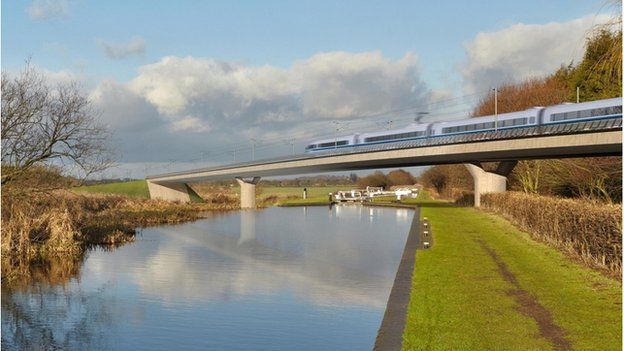
The Welsh, Scottish and Northern Ireland governments need to join forces to campaign for full Barnett consequentials resulting from the England-only High Speed Rail 2 project. 
Only a few weeks after HS2 Ltd, the planners behind the multi-billion pound development, stated that there is "no business case" for Scotland and that the project would now not be extended north of the border
Plaid Cymru parliamentary leader Jonathan Edwards MP speaking on June 11th at a Transport Questions session in the Commons to press the UK Government on securing a fair share of HS2 spending for Wales, said:
"I was disappointed to hear the Transport Secretary replying to my question by maintaining his position that there will be no fair funding from HS2 to Wales, despite the admission of HS2 Ltd.
"Any claims of a business case for HS2 that would benefit Wales has long been demolished by official KPMG figures showing that the project would wipe over £200m from the Welsh economy each year.
"Because HS2 will be funded from general taxation, taxpayers in Wales will pay for HS2 despite it undermining the Welsh economy.
"It is clear that the Westminster government has no intention of extending HS2 to Scotland. This means that it is clearly an England-only railway, and if the UK's funding mechanisms are to be applied correctly, this must result in a full and equitable share for the governments of Scotland, Wales and Northern Ireland to invest in their own countries' transport infrastructure.
"The moral case to me seems clear. If the Westminster government maintains its current position then I urge the national governments of Wales, Scotland and Northern Ireland to work together to demand fairness for our nations.

"The UK government needs to make a clear statement that this injustice will be rectified when the Comprehensive Spending Review is published, or face sustained pressure from Plaid Cymru and others who will continue to fight for a fair deal from this development."

Thursday, 29 January 2015

AN ALTERNATIVE TO AUSTERITY

Despite all the spin and the waffle it is not difficult to come to the conclusion that 'Austerity' has failed, failed the people of Wales, failed the people of Scotland and failed the people of England. To repeat the same error by voting for any of the three austerity supporting Westminster based and Westminster focused political parties would be a mistake. 

On May 7th 2015 there is a readily available alternative other than more of the same. In Wales the alternative to austerity is Plaid Cymru, in England it's the Greens, and in Scotland the SNP. All three parties can deliver a meaningful alternative agenda to austerity. Plaid Cymru, the SNP and the Greens are separate, distinct parties with their own objectives and policies.  All three parties do, however, co-operate as a single Group in the House of Commons. 

Plaid Cymru and the Greens also have a strong and effective relationship in Brussels, with both parties working together in the Greens/European Free Alliance group. On key issues such as austerity, Trident, and moving political power away from Westminster, the three parties share a common approach; and on environmental issues there is much common ground. In the forthcoming election, the three parties offer an alternative agenda to the stale, failed policies of the Tories, Labour and Lib Dem alike. 


Wednesday, 28 January 2015

A FRACK FREE SCOTLAND!


It is interesting that in Scotland Labour called for this power to be devolved. In Wales, they talked the talk, and then never even asked Westminster about devolving control of fracking to Wales. A recent Parliamentary Question by Jonathan Edwards MP has revealed that the Labour in Wales Welsh Government failed to press the Westminster Government on devolving powers over fracking to Wales. When Plaid Cymru tabled amendments to devolve powers over fracking to Wales our country’s Labour in Wales elected representatives in Westminster sat on their hands or made their excuses and left.  Perhaps it is simply a case of talking the talk at home and figuring that no one will notice when their colleagues continue to do little for Wales at Westminster.

Saturday, 24 January 2015

PARITY WITH SCOTLAND

It’s not difficult to come to the conclusion; that since the advent of devolution, that the package of powers we have been given in Wales is second rate when compared to both Scotland and Northern Ireland. With the publication of new legislative proposals (Thursday 22nd January) for further Scottish devolution, a new going-rate for powers has been set and Wales should settle for nothing less that parity with Scotland.

This is a simple matter of basic fairness. Wales is every bit as much a nation as Scotland and we should expect to be treated on the basis of equality. If we settle for second best, then there are also significant consequences for Wales. Scotland will have powers to block fracking for example; Welsh communities will be left to the tender mercy of Westminster. Scotland will have a greater say on how the money it raises is spent while in Wales we will continue to lack the levers to turn around our economy and create jobs.

A recent poll suggested a clear majority agree with Plaid Cymru that our nation should have parity of powers with Scotland. All the other party leaders should join Leanne Wood, Plaid Cymru’s Leader to work to secure the will of the people and a devolution package that respects Wales and gives our people the tools that other nations take for granted.

The status quo or doing nothing is not an option. If we choose that course then the gulf between the strength of our self-government and that of other countries within these islands will only continue to widen and to undermine Wales' position and hindering our ability to act in Wales' interests on a wide range of issues.

Friday, 19 December 2014

A NEW APPROACH TO POLITICS


Plaid Cymru leader Leanne Wood, First Minister Nicola Sturgeon and leader of the Green party in England and Wales Natalie Bennett have stated that all three parties will unite whenever possible to battle the Westminster parties’ obsession with austerity. Meeting at Westminster the three party leaders said that with no end yet in sight to the failed austerity agenda of the Westminster parties, the General Election next May is an opportunity to change UK politics for the better.
Plaid Cymru leader Leanne Wood said:

"Plaid Cymru and the SNP provide an alternative to Westminster’s promise of austerity and cuts to public services. As the only parties, together with the Greens, to reject the cuts consensus, it is unjustifiable and undemocratic to exclude our three parties from proposed leaders’ debates during the forthcoming UK elections. I reiterate my calls for Plaid Cymru’s inclusion in those debates in order to ensure the people can exercise their right to question and scrutinise all major parties.
"The people of Wales face a real choice at the election. All three Westminster parties are committed to slash and burn economics.

"That means cuts for the sake of cuts rather than balancing the books by investment and spreading opportunities.

"It is likely that there will be another hung parliament after the election. In that scenario, Plaid Cymru could hold the balance of power alongside our colleagues in the SNP.

"Should that happen, Plaid Cymru will seek a rebalancing of power and wealth in the UK: transferring powers away from London to Wales so more of our fate is in our own hands; spreading investment away from the booming City of London to areas in most need of investment.

"If the people of Wales return a strong contingent of Plaid Cymru MPs in May, then Wales will be best placed to secure an outcome to improve the prospects of our people and communities."

First Minister and SNP leader Nicola Sturgeon said:
"There is no end in sight to the Westminster cuts that are already hitting Scotland hard - the Autumn Statement earlier this month set out another £15bn of cuts that are coming our way. Not only will these cuts continue to hit hard-working families, women and the vulnerable hardest – they will also put growth and competitiveness at risk.

"But despite the deeply damaging impacts of failed austerity, the Tories and Labour have made crystal clear their determination to carry on regardless.

"And after four years propping up the Tories, the Lib Dems have no credibility. It is time for a new approach to UK politics - and for our parties to use our influence to bring about progressive change at Westminster.

"Following the referendum in Scotland, the political landscape has changed utterly. The SNP is now the third biggest political party in the UK in terms of membership.

"Last month we sent this message to the BBC, ITV, Sky and Channel 4 - to exclude the SNP, the Greens and Plaid Cymru from general election TV debates would be to wilfully ignore this new political landscape. Put simply, it is just not on.

"Electing a strong group of SNP MPs will ensure that Scotland’s voice is heard at Westminster. Along with Plaid Cymru and the Green Party, we will work to do everything possible to tackle inequality and bring about sustainable economic growth."
Natalie Bennett, leader of the Green Party of England and Wales, said:
"I am delighted to have the chance to catch up with two other female leaders of anti-austerity parties in the UK. Together, we represent, with the Scottish Green Party, a new way of doing politics, a move away from the business-as-usual model of the Tories, Labour and Lib Dems that no longer represents public opinion.

"We are the voice of real change - a voice that must be represented in the leader debates next year.
"The ‘Green surge’ that has seen membership in England and Wales more than double, and Scottish Green Party membership leap more than 625% in 2014 is a sign of the shifting political landscape.

"Collectively the Green parties will be standing in more than 75% of seats in the UK, reflecting the advance of our political philosophy that rejects austerity and believes that everyone should have access to the resources for a decent quality of life, with certainty, without fear, while we all live collectively within the limits of our one planet.

"And in thinking about future financial stability, we have to focus on the reason for our current difficulties, the near-collapse of our fraud-ridden, reckless, over-large financial sector.

"Green MP Caroline Lucas is an outstanding MP. Electing more Greens next year will help to bring about a peaceful revolution in British politics, towards a government that works for the common good, not just for the few."